20 Thrifting Tips for Beginners Every Fashionista Needs in 2026
These thrifting tips for beginners are your cheat code to sustainable, high-end style without breaking the bank.
Thrifting in 2026 is bigger than ever. With both sustainable fashion and the general cost of living on the rise, it’s become a standard for many, and one I’ve fully adopted in recent years. But if I’m being honest, it’s so much more than shopping on a budget or being environmentally-conscious. It’s the secret ingredient to my eclectic and statement-making outfits, and how I rediscovered my personal style after almost losing it several years ago.
If you’ve been itching to shop secondhand, but the thought of rummaging through racks feels intimidating, I’ve got you. Here are 20 thrifting tips for beginners to get you started. Whether you’re dreaming of building the perfect wardrobe, scoring high-quality (and designer) items on a budget, or want those one-of-a-kind pieces no one else has, this guide is your one-stop shop for learning to thrift like a pro.
These are the exact tips and tricks for successful thrifting I wish I knew when I first started. Let’s dig in!
1. Create Your Thrifting Wishlist
Thrifting is definitely the type of experience that leads to a handful of clothing and accessories in any (and every) category, so it’s good to plan ahead. Like any successful shopping trip, keeping your must-haves in a list on your phone (or screenshots for inspo) will help you stay focused and prioritized (if you tend to fill up an entire shopping cart, like me!).

2. Research Before You Go
How to start thrifting requires researching your local thrift stores. Read every detail on the store’s website, and on social media (like Facebook and Instagram), and scour customer reviews. You’ll learn valuable information such as whether the store is well-organized, its cleanliness, changing room availability, prices compared to other locations, and store policies. Don’t be afraid to call ahead and ask. Not all thrift stores are created equal.
One of the best ways to score deals at the thrift store is to sign up for their email list and follow them on social media. From rewards programs to special coupons, daily deals, and end-of-season clear-outs, this will help you plan your next thrift haul on a budget.
3. Your Thrifting Uniform Matters
Planning your shopping outfit can save you the headache if you need to try clothes on. Spoiler alert: less is more!
If there are no changing rooms, a form-fitting outfit, such as a spaghetti-strap tank and black leggings (or biker shorts), is best for layering clothes over. Always wear your best neutral on top (e.g., white, black, etc.), for easy styling with jackets and cardigans. Slip-on shoes with a thin sock are also best for trying on footwear. A small cross-body bag is easy to carry and doesn’t require tracking.
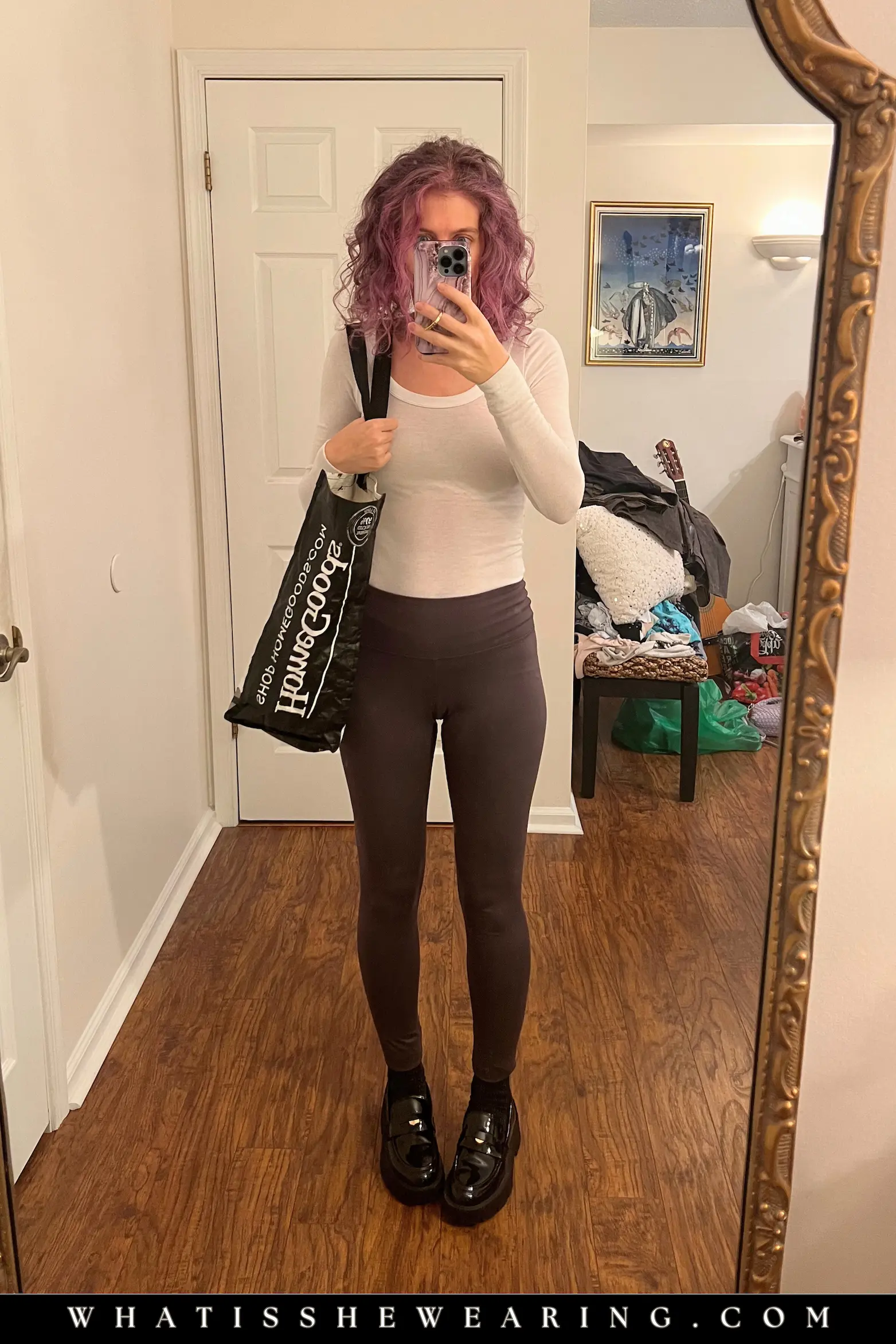
Not into leggings? Your next best option is to wear a slim-fitting layering top (in your best neutral) with a flattering pair of jeans or trousers that go with everything.
Many thrift stores don’t have shopping bags for carrying your purchases away. Bring a large, reusable shopping tote or a trash bag, so you don’t have to hold your things in your hands. Also, bringing separate bags for shoes and clothes, and even a smaller bag for jewelry, can keep your items safe on the trip home.
4. Bring a Buddy for Your First Thrift
Some people like to shop alone, but a friend can help you make decisions or snap photos and videos of your outfit try-on. It also makes for a memorable experience because they were there when you found that AMAZING vintage dress for $5!
5. Bring Clothes to Donate
Another way to thrift for clothes on a budget is to bring in items to donate. Many stores offer a discount on your purchase if you donate something beforehand.
6. Best Days to Go Thrifting
The best time to thrift is when the store opens, because the selection is fresh (especially on Monday and Tuesday). Many stores offer colored-tag sales (all pink-tagged items for $1, for example), and those items are quickly snatched up. However, associates release new merchandise throughout the day, and I’ve scored amazing finds in both the afternoon and evening. Weekdays are typically less crowded than weekends, which is nice when you want space to search and try on.

7. Plan for Several Hours to Shop for Clothes
Plan your day so you have several hours to shop around and take your time. Thrifting is more like a marathon than a sprint, and even at budget prices, you want to make smart purchases. I recommend at least 3 hours to browse, try on, deliberate, and check out. However, your trip could go longer depending on store size, if you’re dropping off a donation, or if you’re shopping other sections like home and decor.
Eat, drink, and refresh before or after your trip.
8. Check Every Single Section
If you want to find the best items at the thrift store, you need to check every section. Most stores do their best to keep things organized, but, like any clothing store, things get shuffled around. Don’t sleep on the following sections: pajamas (for silk pants and slip dresses), lingerie, costumes (for the eclectic gals), men’s denim and jackets (for vintage Levi’s and oversized blazers), or kids’ t-shirts.
Seriously, if you have the time, search through everything.
The beauty of finding a one-of-a-kind piece (like my designer jacket score from Escada) that was hiding in the “wrong” section.
9. Browse Quickly by Following Your Best Colors
If you want to maximize your time, do what I do and follow your best colors. This means as you go through the racks, you pause on your most flattering colors while quickly shuffling past your least flattering colors. For example, I shine in cool colors, so I’ll spend time looking through items in my favorite hues, while quickly passing over extra warm tones that tend to make my skin look blotchy.
10. When It Comes to Sizing, Be Liberal
It’s no surprise that sizes vary across brands, especially when thrifting. Vintage clothes and custom-made pieces are sized smaller, so don’t feel strange about grabbing a large when you’re a small. Sizing up can lead to your best finds in knitwear, outerwear, pajamas, and collared shirts.
11. Bring a Measuring Tape (Beginner Thrifting Hack)
Before you shop for clothes, make a note in your phone with all your measurements: waist, hips, bust, inseam, and shoulders. Bring a measuring tape with you in case there’s no fitting room, and you’re not keen to do your try-on in front of people.
For pants, you can always use the neck test: it’s a good fit if the waist is roughly twice the circumference of your neck. Perform the test by wrapping the waist of the pants around your neck. If the ends meet, the pants should fit; if they don’t, they’re likely too small; if they overlap, the pants will be loose. Note: This method works best for high-waisted pants and doesn’t factor in your hips, thighs, or butt, so use your best judgment.

12. How to Spot Quality When Thrifting Clothes
One of the best things about thrifting is that exceptional quality lives on through well-maintained secondhand pieces, vintage, and deadstock. Fast fashion (including many designer brands) has sacrificed quality for quantity, and the drastic comparison is found in thrift stores. You’ll learn what real quality looks and feels like by examining true vintage pieces. Compare and shop for styles that mimic their quality in stitching, weight, and fabric. Clothing with papery-like tags indicates recent production and lower quality, and should be priced accordingly (though many are not).
With any purchase, it’s important to know what you’re paying for. Always confirm the brand (if the tags are still attached and legible) and look it up if you’re unsure of quality. For fully-synthetic pieces, opt for premium or luxury brands – or determine the item’s purpose in your wardrobe and whether the price justifies the quality.
When shopping for luxury brands on a budget, check the labels to see what materials the item is made of. Opt for natural fabrics like wool, cashmere, silk, linen, and cotton (or blends with a heavy percentage of natural fabric). For designer bags, check for the serial number or date code on a leather tag or stamp inside the bag (check online to confirm the brand’s format and location).
13. Diligently Inspect Each Item
One of the biggest mistakes when thrifting is forgetting to check an item over for stains, pills, holes, smells, missing buttons, or defects. People love to drop off pants with zippers that won’t stay up, armpits and collar stains, or tops that ride up – which you don’t find out until you’re wearing them out. While many of these things are fixable, some are not, making your purchase a complete fail.
For no regrets, get in good lighting, review them inside and out, and also inspect when you try them on.
*face palm*
14. When In Doubt, Pass On It
It’s easy to purchase an item you’re on the fence about when it’s only a few dollars. But if sustainable fashion on a budget matters to you, every item you purchase should be something you love. If you’re unsure of the fit, style, care required, whether you’ll wear it, or the item’s condition, then it’s best to move on and save your money for something better.
And if you go home and regret not getting it, head back tomorrow. If it’s still there, it was meant for you.
15. Think Outside the Box
Thrift stores are not merchandised like clothing stores, so it may be hard to envision an item in a full outfit. This is an opportunity to flex your styling muscles by finding another piece (or two) that goes with it. An item truly comes alive with the proper styling, so take the time to get creative and see what you come up with.
One of the best ways to develop your personal style is through thrifting.
16. Tailoring is Your Secret Weapon
Repurpose the money you save by thrifting to have your clothes altered so they fit you just right. Purchase pieces a size or two larger, so you can have them custom-fitted. Or, have unique pieces reimagined and upcycled, such as a dress made into a skirt set. You’ll never be caught in the same outfit as someone else again!
17. Experiment with Trends
If you love to shop new, but don’t want to waste money on trends, thrift them at a fraction of the cost. While some outlets are a hodge-podge of random things rotated seasonally, fashion is cyclical, and you’ll usually find similar (if not the same) trends to add to your wardrobe on your terms.

18. Shop Often and Shop Around
Thrifting can sometimes be a hit or miss. If you’re looking for a certain item, shop around at different stores. Higher-income areas will have more premium brands overall, while you may find more streetwear and eclectic pieces in densely populated cities. Also, the neighborhood doesn’t always dictate the prices, so stop in anyway.
19. How to Clean Thrifted Clothes Properly
Always clean and sanitize your thrifted items before wearing them. Spot clean stains (I love Martha Stewart’s tips for stain removal). Confirm care instructions on each item and put the easy ones in the laundry right away. Remove smells by adding baking soda with your detergent and rinsing with vinegar instead of fabric softener. Letting your clothes line dry in the sun can also get rid of smells. Follow proper care for wool, cashmere, and silk (it’s worth it to make your clothes last longer).
Leather conditioners and cleaners can help revive vintage leather goods (or take them to a leather specialist). To remove odors in old suede and leather jackets, spray the lining (avoiding the suede or leather) with vodka and let it dry. Break down bacteria and odors inside footwear with a DIY spray of equal parts water and vinegar. Gently remove dirt and scuffs on suede with a suede brush.
20. Treat it Like a Treasure Hunt
The last thrifting tip is to remember to have fun! Let your inner child rejoice in the search for cool things! Once you find your first forever piece, it becomes more of a mystical game than a shopping trip. And wearing your clothes is so much more fun when they come with joyful memories!