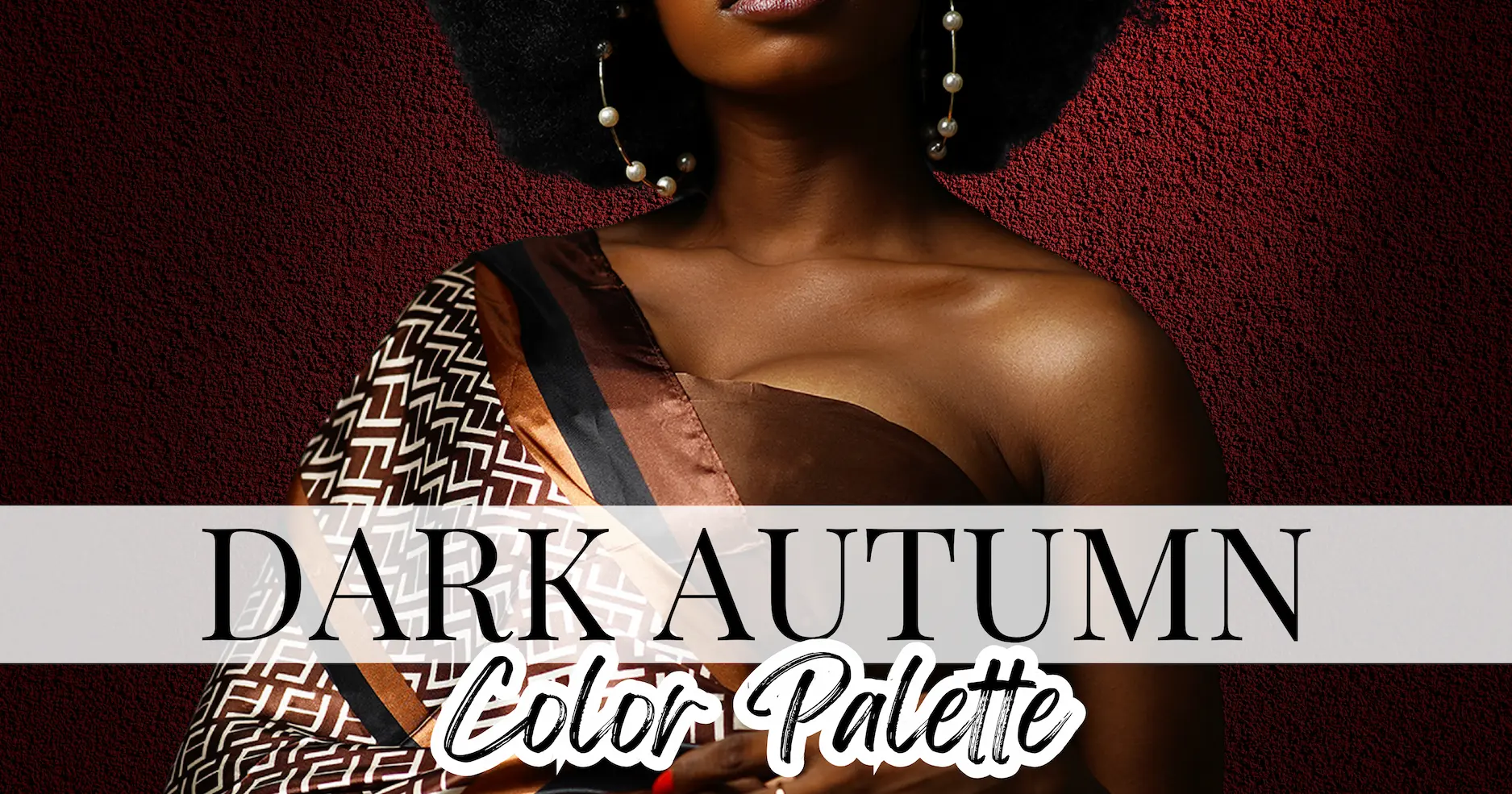
Dark Autumn Color Palette: A Complete Guide
Ever wondered why some colors make you look sun-kissed and glowing, while others leave you looking like you pulled an all-nighter? If you’re drawn to the moody magic of deep reds, smoky olives, and charred golds, the dark autumn color palette might just be your style soulmate.
This post features affiliate links, which means I may earn a small commission if you purchase through them, at no cost to you. Refer to the disclaimer for more information.
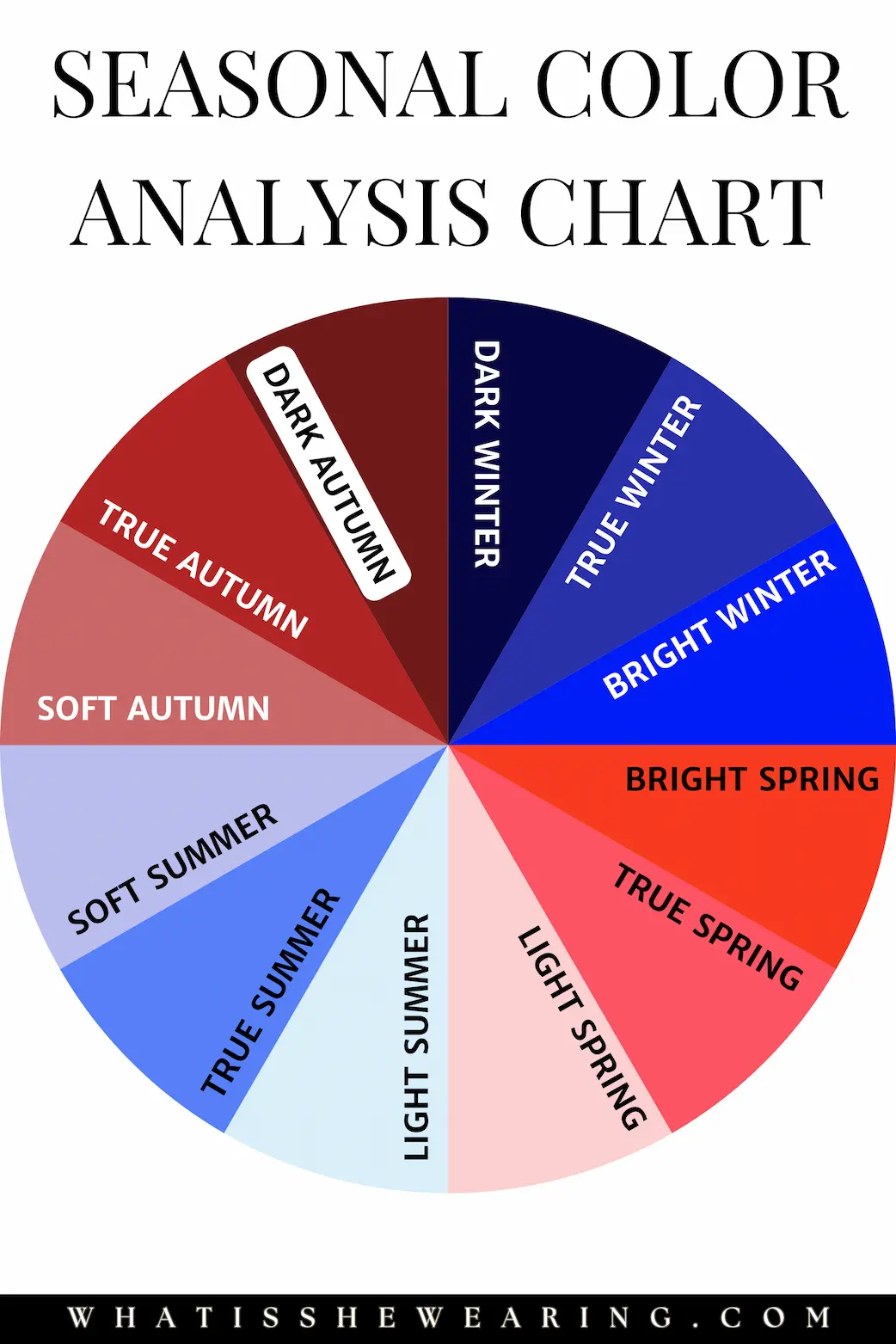
At its core, the dark autumn palette is one of the 12 seasonal color analysis categories, a system that deciphers your most flattering shades based on your skin undertone, hair color, eye hue, and the natural contrast between your features. It’s like having a personal color stylist, ensuring every outfit feels like an extension of you.
Styling the wrong colors can make you look blotchy, faded, or sickly. We’ve all been there: that new work outfit you thought was on-point, but instead received awkward remarks like, “What happened?”, “Rough night?”, or “Are you feeling okay?”. Crushing as these comments were, it may have been those cool pastels or stark whites clashing with your warmth and draining your vibrancy.
But flip the script with your dark autumn neutrals and accents? Suddenly, your complexion pops with a fresh, youthful radiance—skin tone evened out, eyes sparkling. You’ll look effortlessly beautiful–and others will notice. It’s the glow-up that doesn’t require filters, just harmony.
Color analysis traces back centuries, but it exploded into modern wardrobes thanks to trailblazers like American designer Suzanne Caygill, who turned it into must-attend seminars in the mid-20th century. By the 1980s, books like Carole Jackson’s Color Me Beautiful democratized the magic, handing everyday women (and style obsessives) the keys to their perfect palette.
This is your one-stop shop for mastering the dark autumn color palette: from spotting whether you’re a dark autumn, to nailing the color breakdown, dodging those total no-gos, and curating outfits that’ll have you channeling cozy sophistication all year long.
Ready to get into the full guide? Let’s go!
Dark Autumn Color Analysis
What is a dark autumn?
The autumn season embodies a warm and rich color palette. Chronologically, dark autumn occurs in the last third of autumn. This marks the end of a season when temperatures are dropping, the last leaves are falling, and days become short and dark. Dark autumn emphasizes the transition into winter, the darkest time of the year.
The dark autumn color palette is warm, deep, and velvety. It is the darkest of the three winter color palettes. Dark autumn is also referred to as deep autumn.
In contrast, a true autumn color palette lives in the middle of the season, emphasizing rich warm tones reflected in the peak of fall foliage, clear days, and cool nights. Soft autumn is at the beginning of the season, embodying the softness of the season through warm, muted tones.
Dark Autumn Color Characteristics
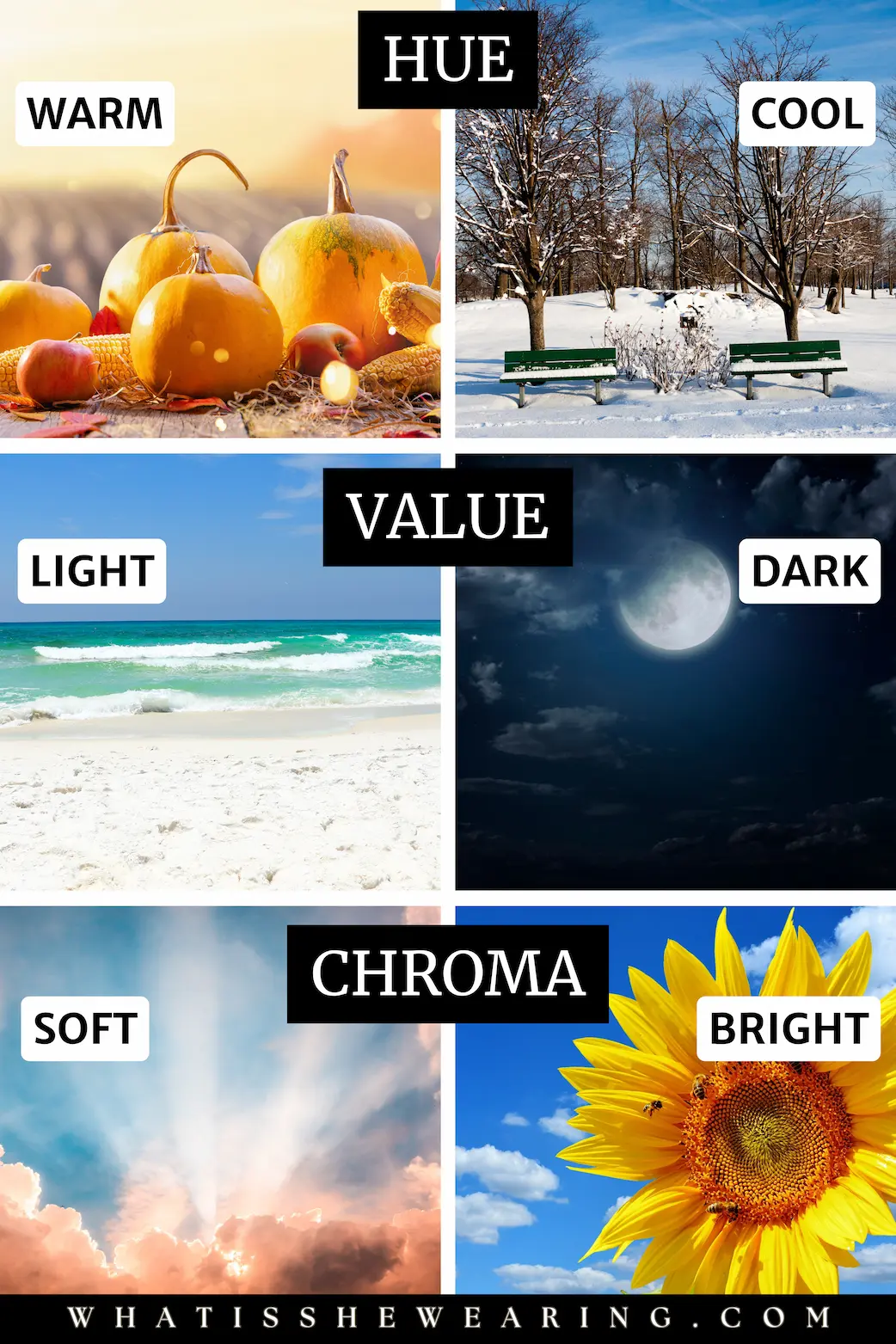
The 12 seasonal color palettes are defined through the following characteristics: hue, value, and chroma.
A color’s hue defines how cool or warm the color is. Warm tones contain a yellow or beige undertone while cool tones contain a pink or blue undertone. True hues are colors that are neutral, neither warm nor cool, such as the primary colors red, blue, and yellow.
A color’s value defines how dark or light the color is.
A color’s chroma or intensity defines how soft/muted or bright/clear the color is.
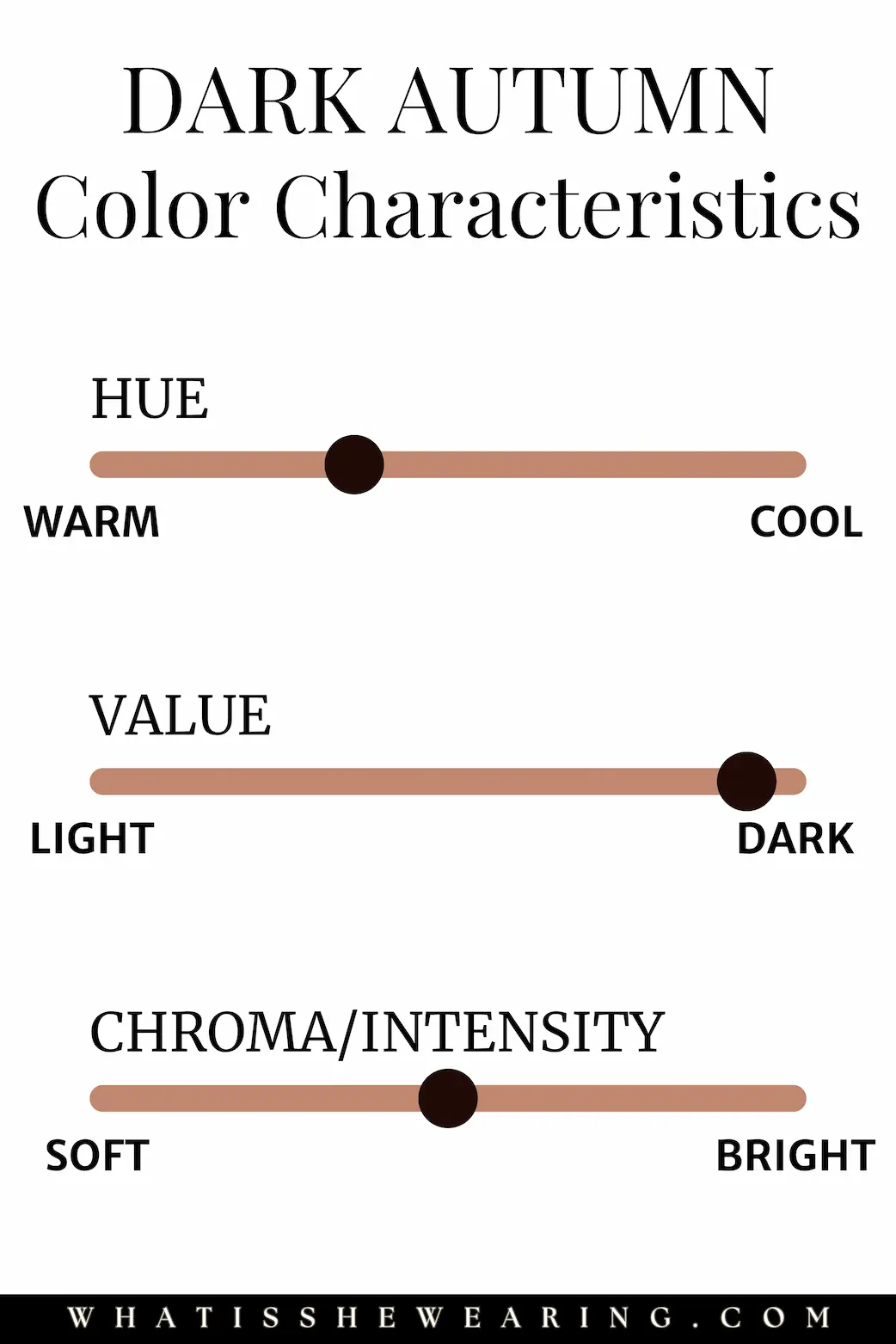
Dark autumn colors are warm in hue, dark in value, and balanced in chroma (or medium contrast). They appear saturated and velvety due to the contrast between warmth and depth.
Dark Autumn Characteristics
Several features define someone as a dark autumn. In general, dark autumns are characterized by neutral-warm, olive, or warm skin undertones, medium-high contrast facial features, and dark, clear eyes. Lips are neutral-warm to warm pinks and reds. The dominating characteristic of a dark autumn is dark, followed by warm.
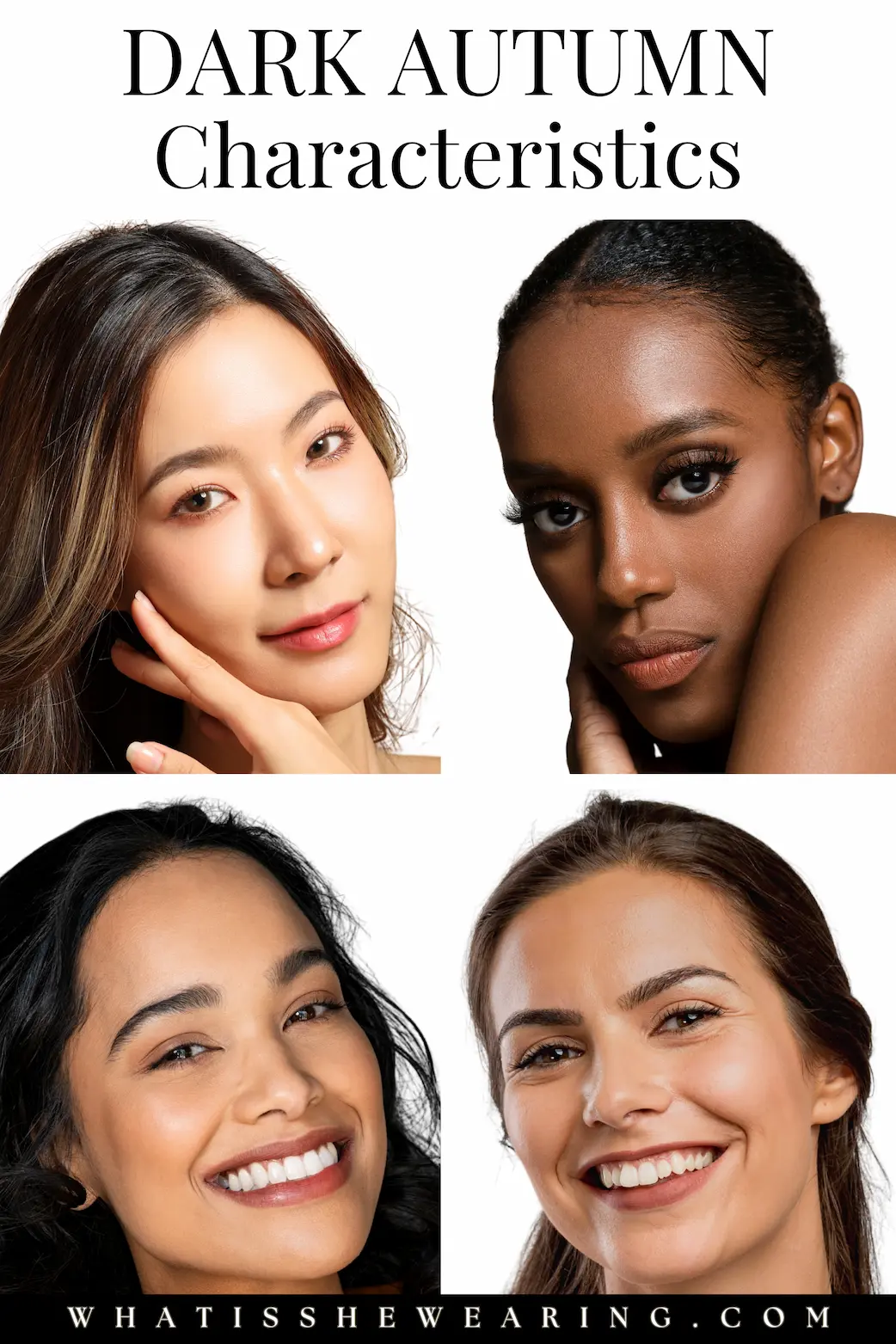
If you’re not an exact match to these characteristics, it doesn’t mean you can’t style with a deep autumn color palette if you find that the colors suit you. Every person is unique, so experimentation in fashion is the only way to find your best colors.
Related Post: How To Find My Style In 5 Easy Steps
Dark Autumn Features: Skin Undertone
Since dark autumn is considered a warm season, the skin undertone is neutral-warm or warm. Warm colors are best suited to your warm features, but sometimes it isn’t easy to tell from looking in the mirror. You can perform the following tests to determine your skin undertone. Do these tests in natural light without wearing makeup.
Test 1: Blank Sheet Of Paper
Hold a blank sheet of paper next to your face. Does it brighten your face or make it look dull and drab? If it brightens, your skin’s undertone is cool. If it dulls, your skin’s undertone is warm. You may be neutral if you can’t tell.
Test #2: Color Of Your Veins
Examine the veins on the underside of your wrist. Blue or purple veins indicate a cool undertone, and green veins indicate a warm undertone. If you can’t tell, you may be neutral.
Test #3: Silver Vs. Gold Jewelry
Compare holding gold and silver jewelry against your face. Try to find a large, thick piece of jewelry for this test. The metal that shines and brightens your face is the winner. Gold jewelry looks best on warm skin tones, while silver jewelry looks best on cool skin tones. If you’re not sure, you may have a neutral skin undertone. *Dark autumns prefer gold tones, but might also look okay in silver.
Lastly, does your skin usually tan or burn out in the sun? Skin that tans easily is typically warm, while skin that always burns before a tan is generally cool.
Side note: You may test neutral as a dark autumn, but another way to tell is if your skin looks ashy during the winter season. This is a typical sign of autumn complexions.
Dark Autumn Features: Eye Color
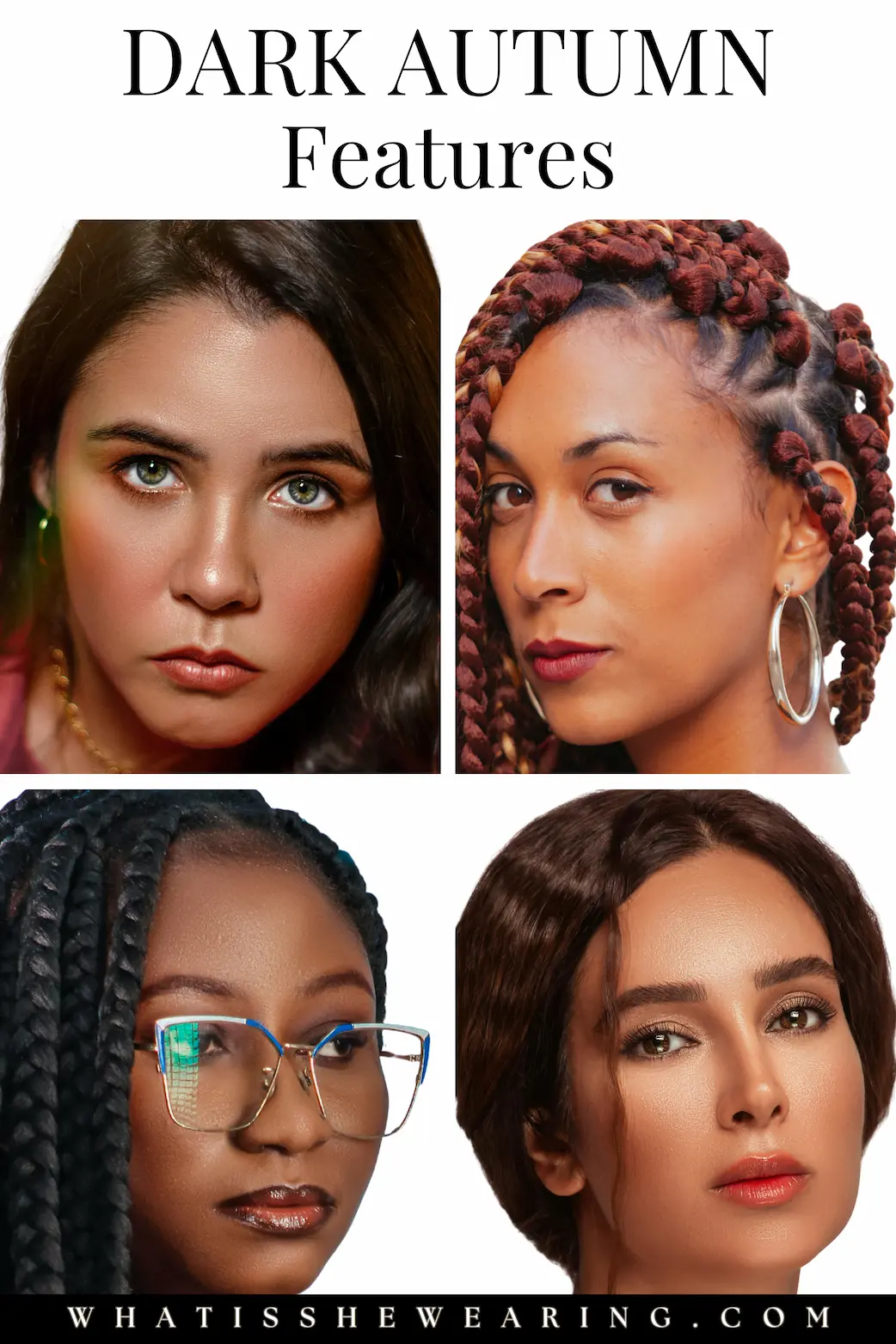
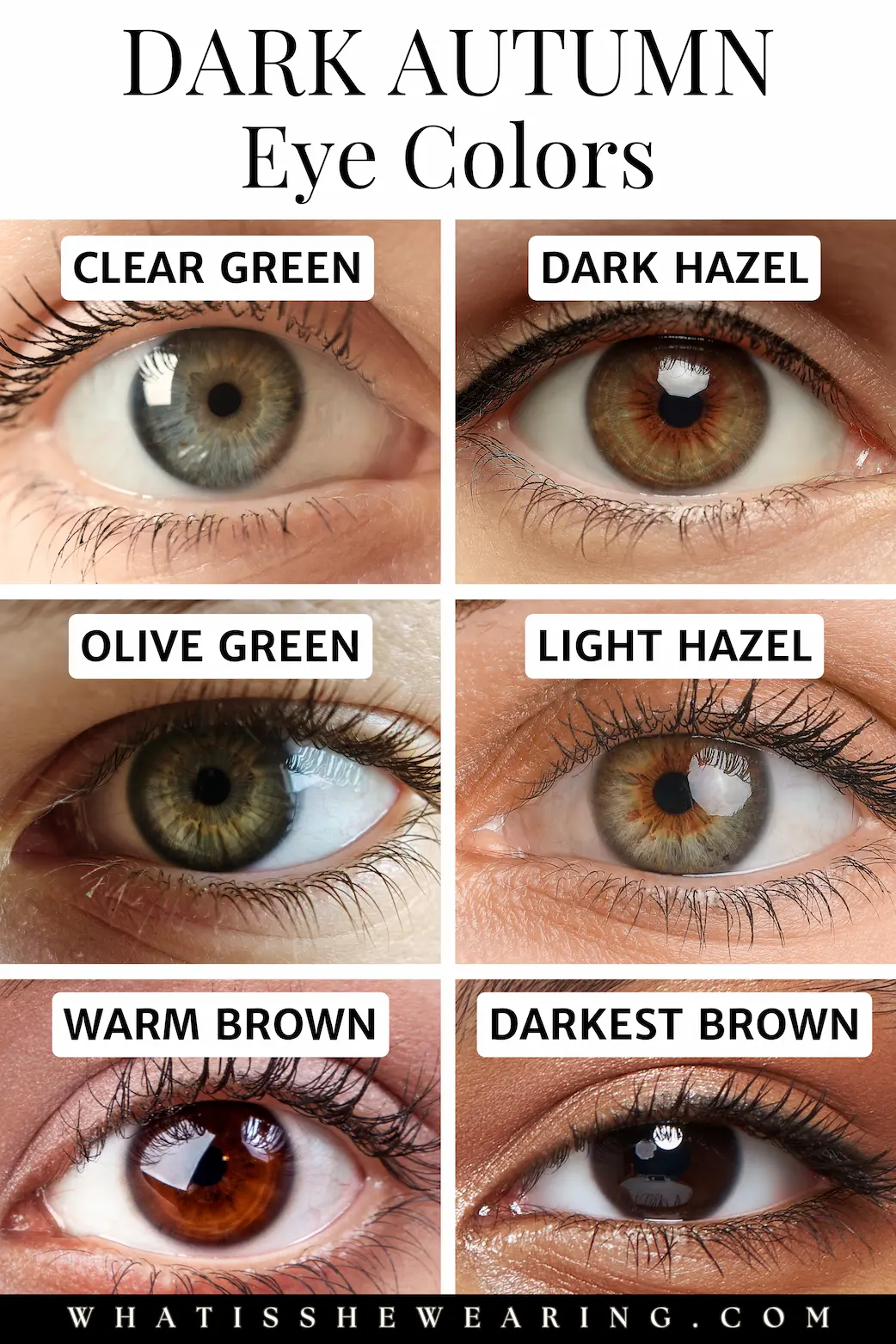
Dark autumn eye colors are deep and warm-toned. Colors include dark brown, almost black, warm brown, dark hazel, light hazel, olive green, and clear green. The irises have depth in color or with details like defined borders, an Aztec sun, or freckles. There is a high contrast between the iris and the whites of the eyes, giving them their intensity.
Dark Autumn Features: Contrast
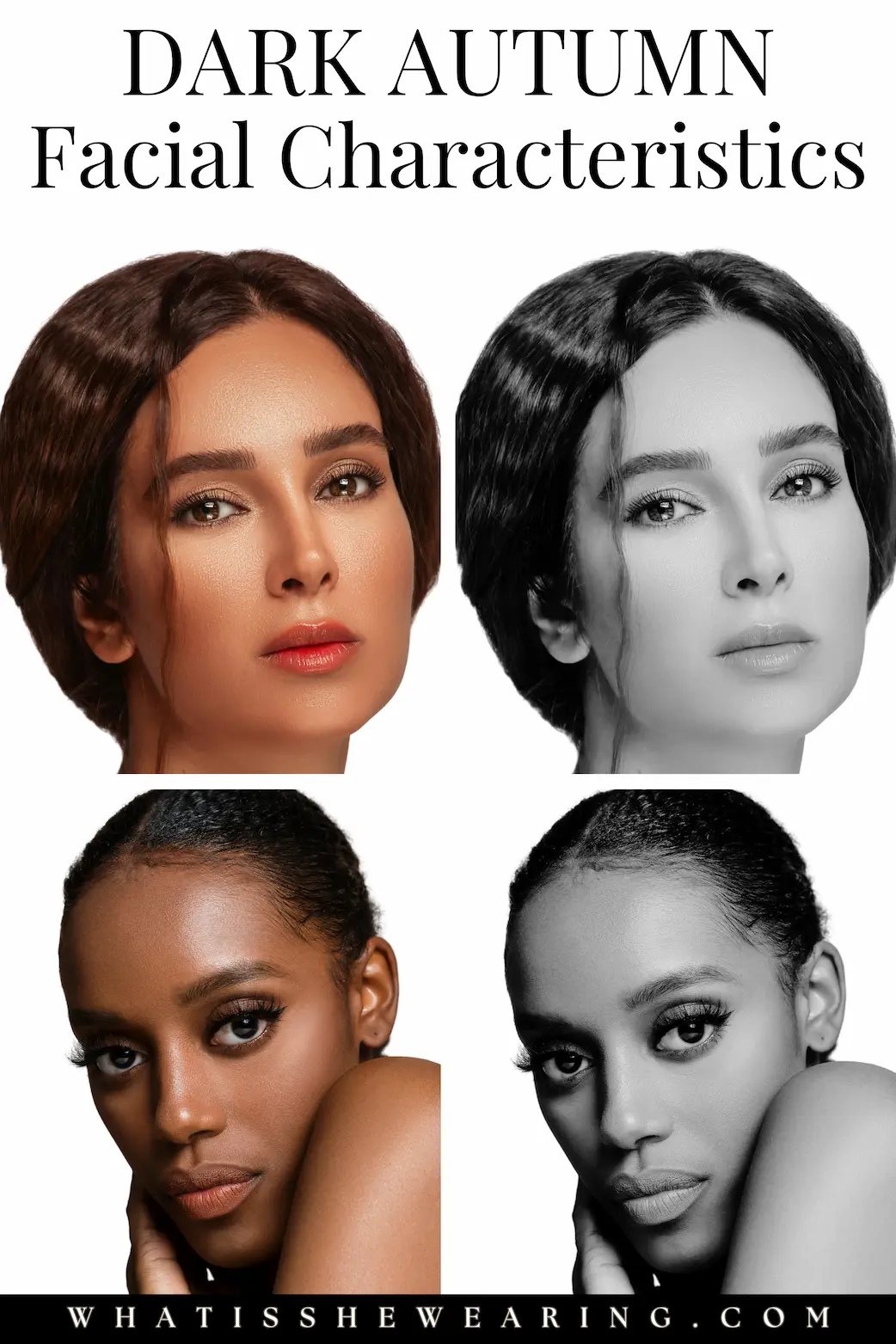
The leading characteristic of a dark autumn is depth, which means their facial features are dark. The colors and features of the face, such as hair, eyebrows, eyes, and lips, have a medium-to-high contrast against the skin. There will be a balance of striking features against a soft glow, such as clear, dark eyes against golden skin.
Related Post: How To Style Your Clothes Using Juxtaposition
You can take a photo of yourself and convert it to grayscale to determine your level of contrast.
Dark Autumn Features: Hair Color
Your natural hair color also determines your color season. Dark autumn hair is rich and dark, with warm, golden, or red highlights. There will not be any cool tones or ashy quality to the hair. Hair includes the following colors:
- Warm black
- Rich dark brown
- Deep auburn
- Brown with caramel or golden highlights
- Warm gray or white with yellow undertones
While it isn’t common for a dark autumn to have light hair, a dark golden blonde could fall into this category.
Dark Autumn vs. True Autumn Color Palette
What’s the difference between a dark autumn and a true autumn? Although both color seasons are considered warm, a dark autumn’s leading feature is dark, while a true autumn’s leading feature is warmth.
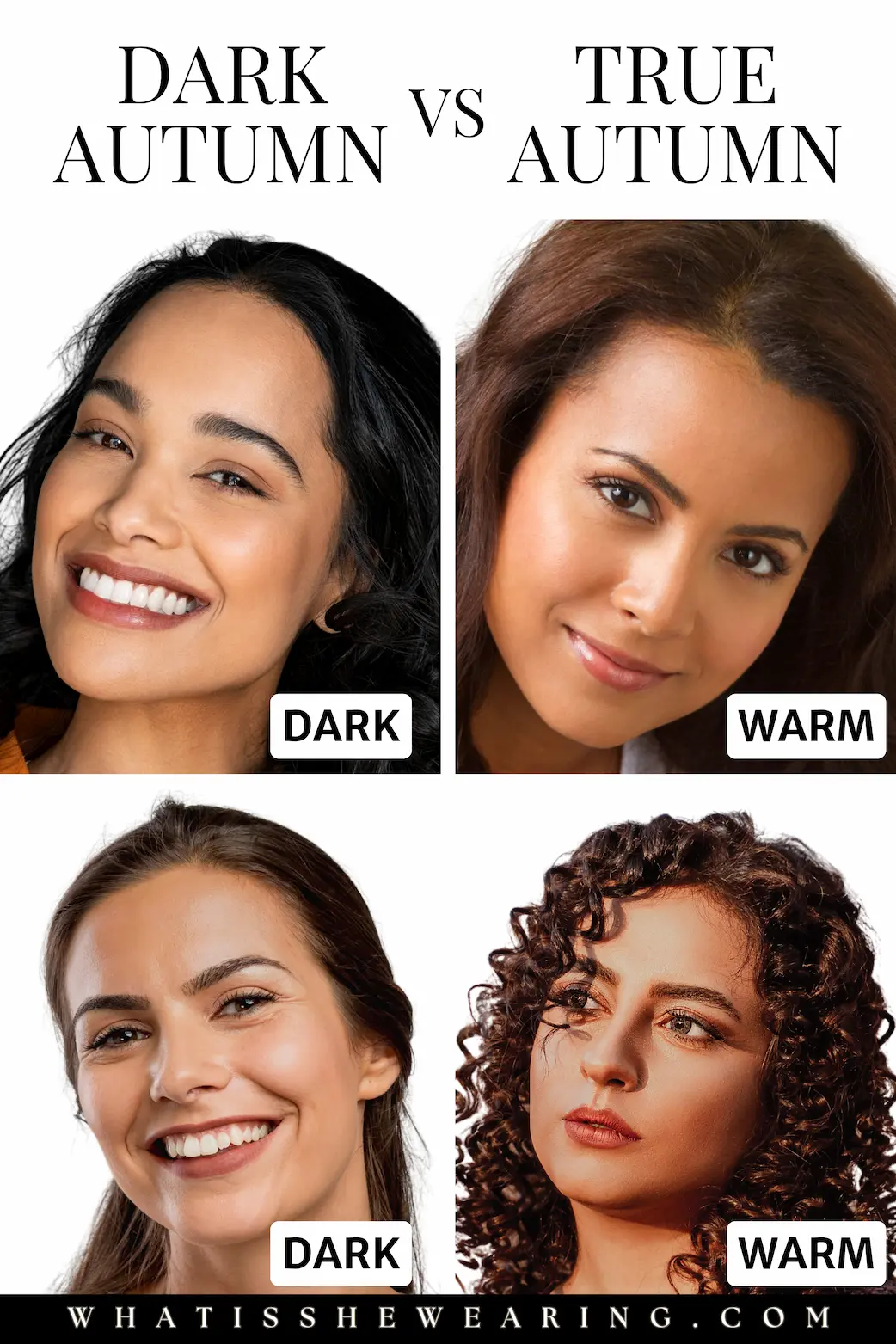
True autumns have completely warm features, including their skin tone, without an ounce of coolness. True autumns can handle the extra warmth and heavy saturation of pure hues, while dark autumns offset the hues with black, toning the color palette down and slightly cooler. A head-to-toe true autumn outfit may overwhelm the complexion of a dark autumn without the necessary contrast.
The best way to determine whether you’re a dark autumn or a true autumn is with the draping method (draping at the neckline with large fabric swatches in indirect sunlight).
Dark Autumn vs. Dark Winter
Dark autumn may also be confused with dark winter due to their similar levels of darkness and high-contrast eyes. However, the difference lies in their hue and chroma. Dark autumn carries warmth and softness, while dark winter is cool and starker, with a higher contrast overall.
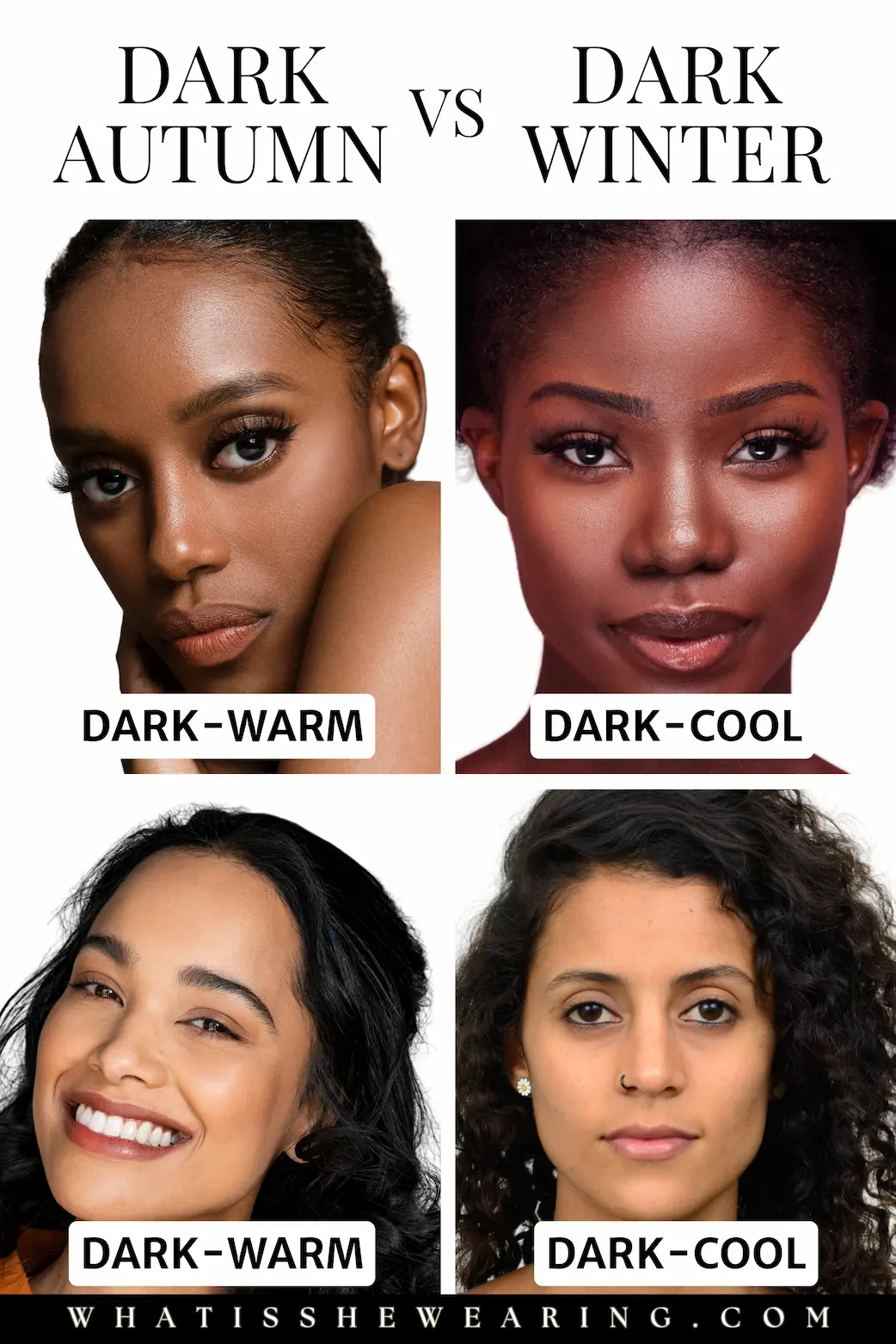
Deep autumns shine in dark colors that are neutral-warm to warm, with gold or brass jewelry in antique finishes. Dark winters shine in dark colors that are neutral-cool to cool, with silver or pewter jewelry in antique finishes. While a deep autumn may borrow certain colors from the deep winter sister palette, they will always look best in their home season.
The best color palette is the one that looks the most effortless and natural against your face.
Dark Autumn Celebrities
These celebrities have characteristics that classify them as candidates for a dark autumn color palette.
Andie McDowell
Meghan Markle
Halle Berry
Serena Williams
Maya Rudolph
Ariana Grande
Chrissy Teigen
Freida Pinto
Dark Autumn Color Palette
The deep autumn color palette consists of hues that are dark, moody, and warm to warm-neutral, complementing the features and complexion of a dark autumn. The emphasis is always on rich, velvety versions of these colors rather than ultra-warm or overly muted pairings.
The overall palette embodies moodiness, romance, layering, and the subtle glow of the season.
Related Post: The Secret To Elegant Classy Style
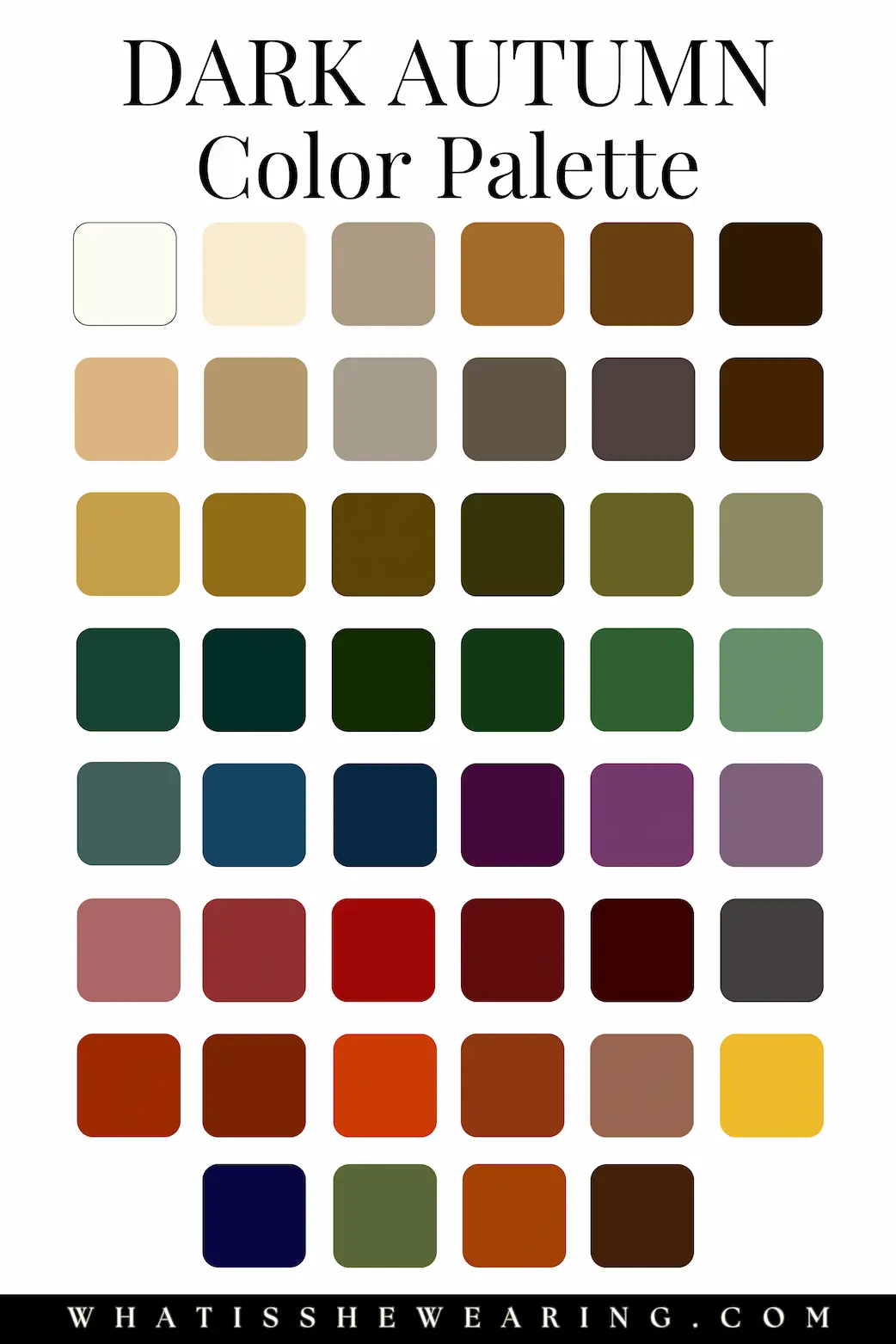
The following colors make up the dark autumn color fan at a high level:
- Brown-black
- Chocolate brown
- Rust
- Burnt orange
- Tan
- Mocha
- Camel
- Soft ivory
- Buff beige
- Antique gold
- Dark green
- Hunter green
- Emerald green
- Olive green
- Navy blue
- Dark teal
- Eggplant
- Dark purple
- Mahoghany
- Wine red
- Garnet
Dark Autumn Neutral Color Palette
When planning dark autumn wardrobe essentials, rich neutrals are the way to go. Your features shine in both layered dark colors (e.g., monochrome browns) or medium-contrast colors (e.g., chocolate brown with an olive green accent).
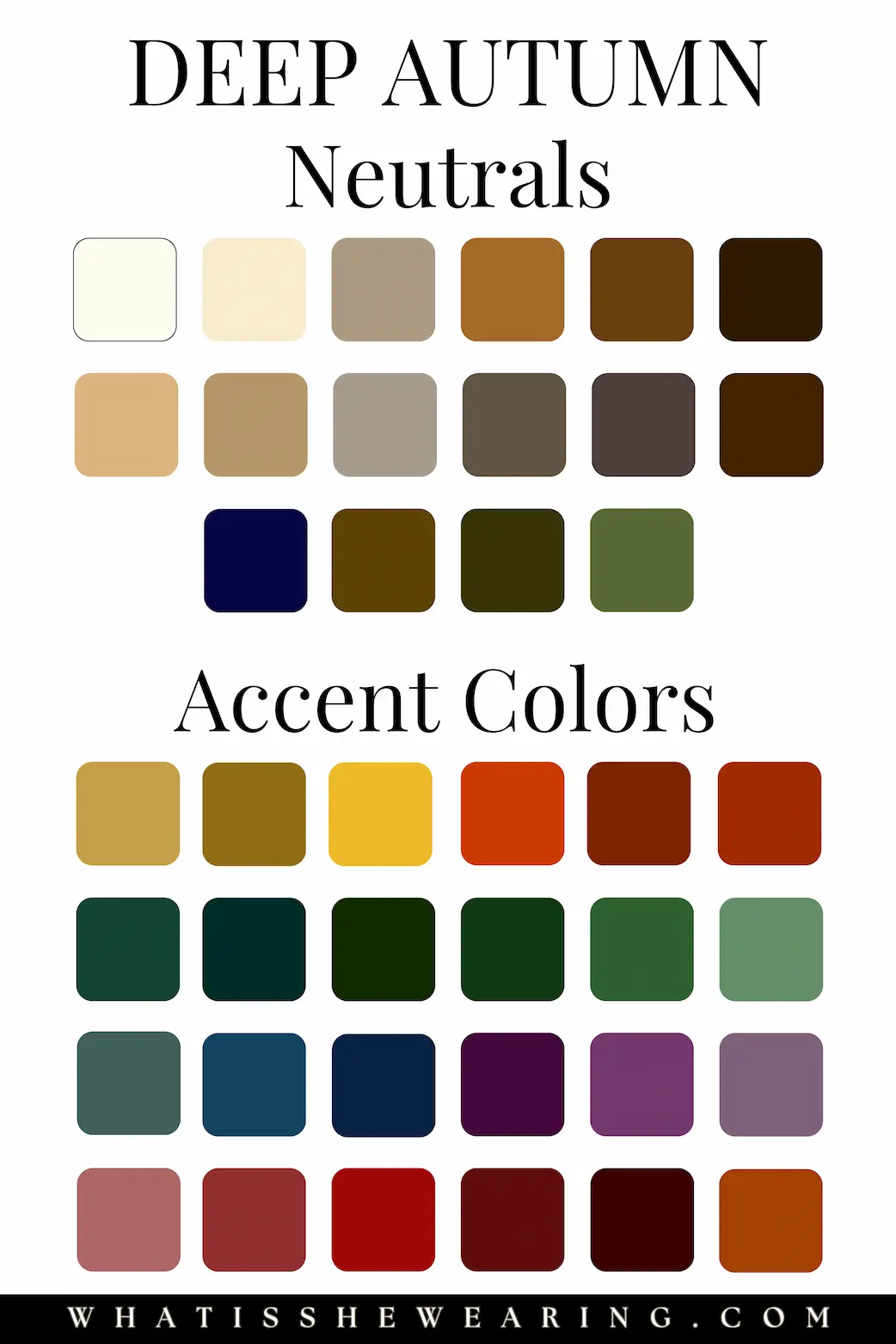
- Brown-black
- Chocolate brown
- Tan
- Mocha
- Camel
- Soft ivory
- Buff beige
- Olive green
- Navy blue
Related Post: How To Start A Capsule Wardrobe This Year
Warm hues that are soft, muted, or saturated work best as accents against your darks.
Not all dark autumns have the same “best colors”. I always recommend the draping technique to determine your own. It must be performed in indirect, natural light for the most accurate results.
Your best colors will always brighten your face and features, making you look refreshed and youthful with a more even skin tone. Your teeth may even appear whiter. On the other hand, if a color makes your face look dull, washed out, or blotchy, it isn’t a good color for you.
Related Post: 10 Elegant Style Tips To Look More Sophisticated
Dark Autumn Worst Colors
Deep autumn’s focus is on depth, warmth, and layers – thus, the color palette reflects these same qualities. Without the same level of balance, a dark autumn can look aged and grayish. Colors that are too cool, bright, contrasting, or light should be avoided.
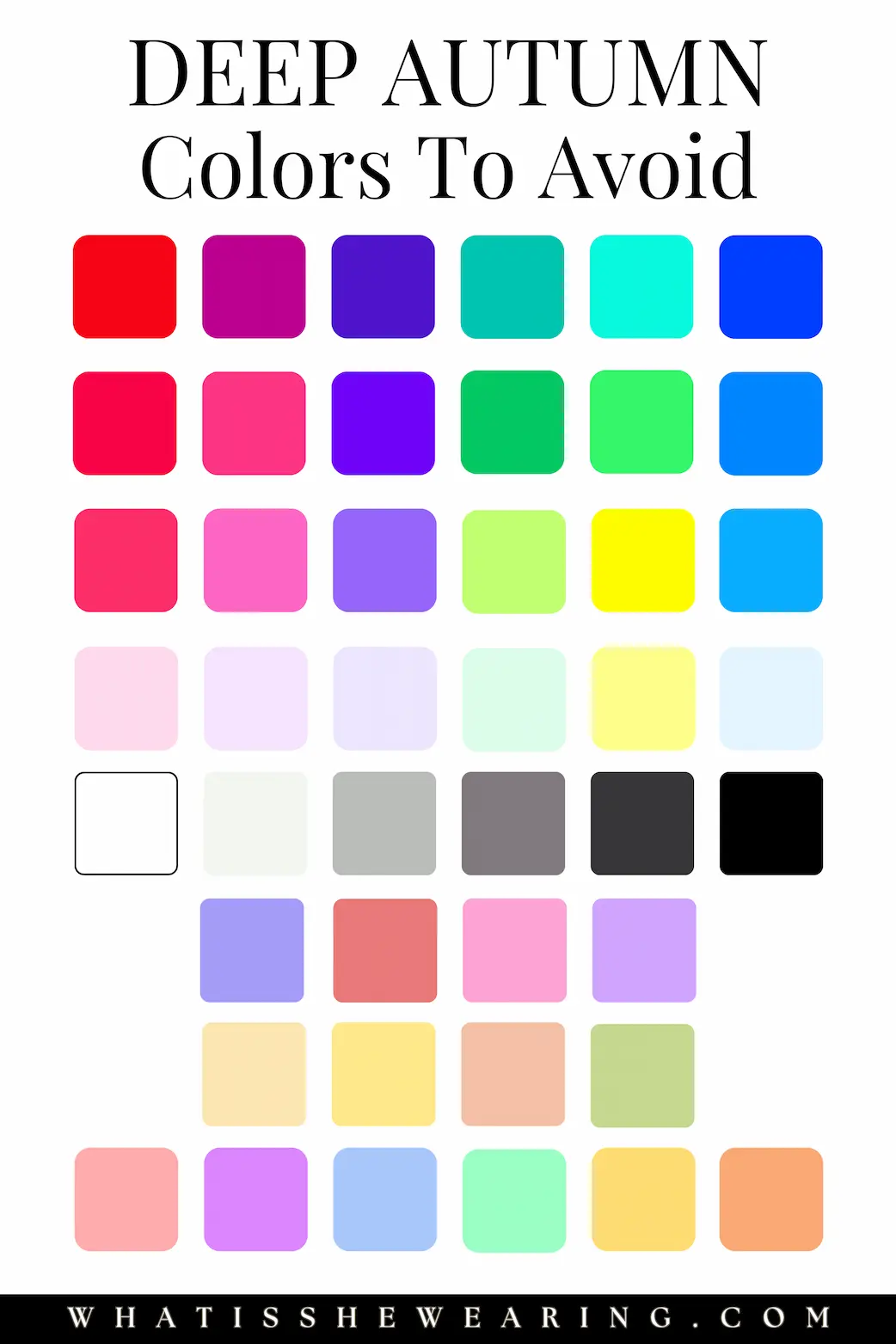
Avoid the coolest colors of the summer and winter palettes. Stick to warm versions of classic neutrals, as true whites, blacks, and grays can wash you out.
Related Post: 21 Everyday Fashion Tips To Elevate Your Style
Dark Autumn Color Analysis
The best method for styling a dark autumn is with rich, warm darks in monochrome or tonal outfits. Gold and brass jewelry, including muted and antique finishes, looks best. Your best colors in the palette will elevate your features, allowing natural or minimal makeup. However, applying dark autumn makeup (e.g., dark brown mascara, eyeliner, bronzer, or dark lips) will enhance your striking features, perfect for formal occasions and date nights.
Dark Autumn Color Combinations
Let’s look at the pairing of moody tonals with an accent or neutral for a dark autumn. Jewelry and accessories are a great way to add an accent to a dark autumn look.

A dark autumn’s complexion can also handle medium-contrast combinations, with the dark color dominating. Add in high contrast colors (something lighter or brighter) as small accents for that subtle pop.
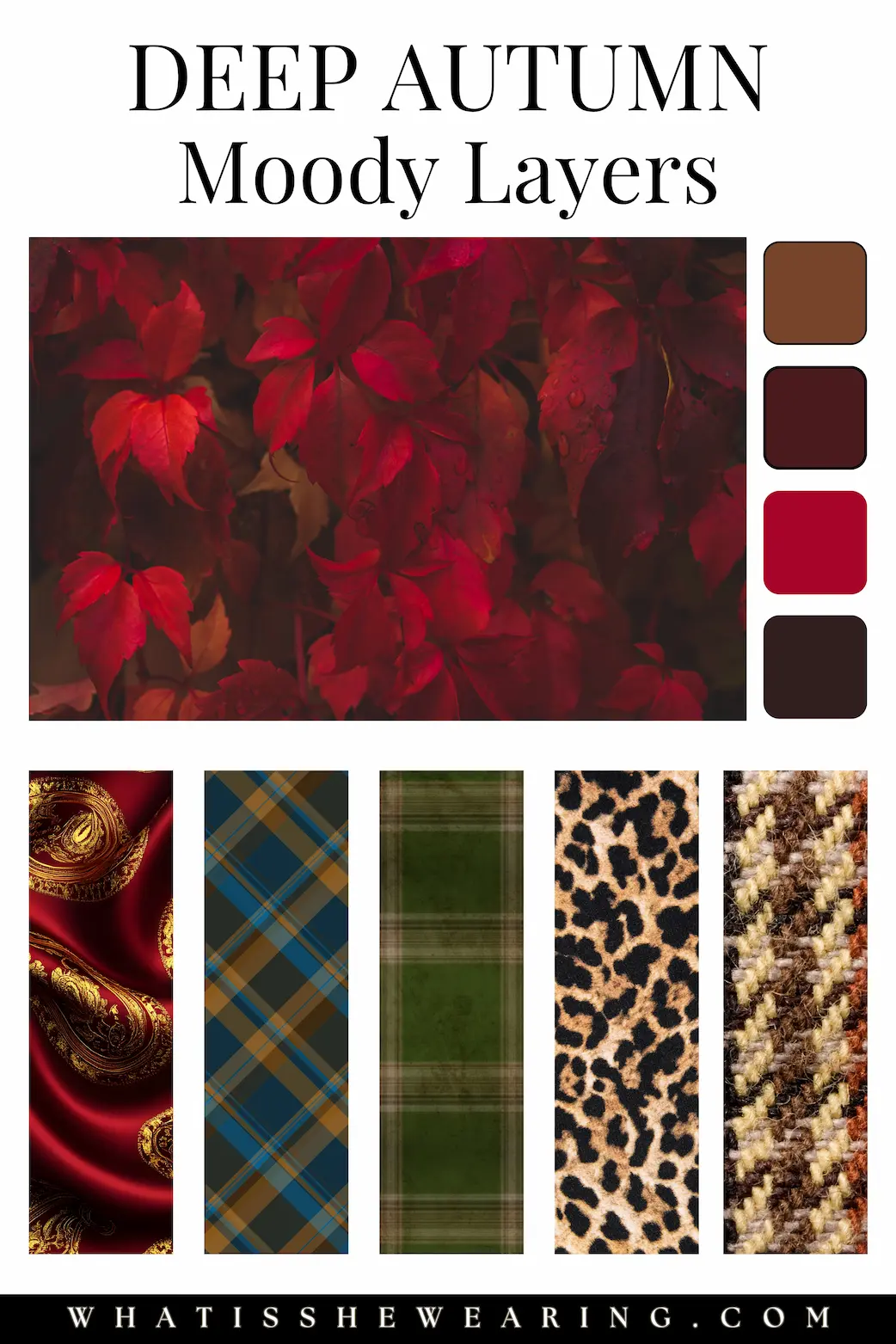
Prints and patterns complement the dramatic aesthetic of a deep autumn.
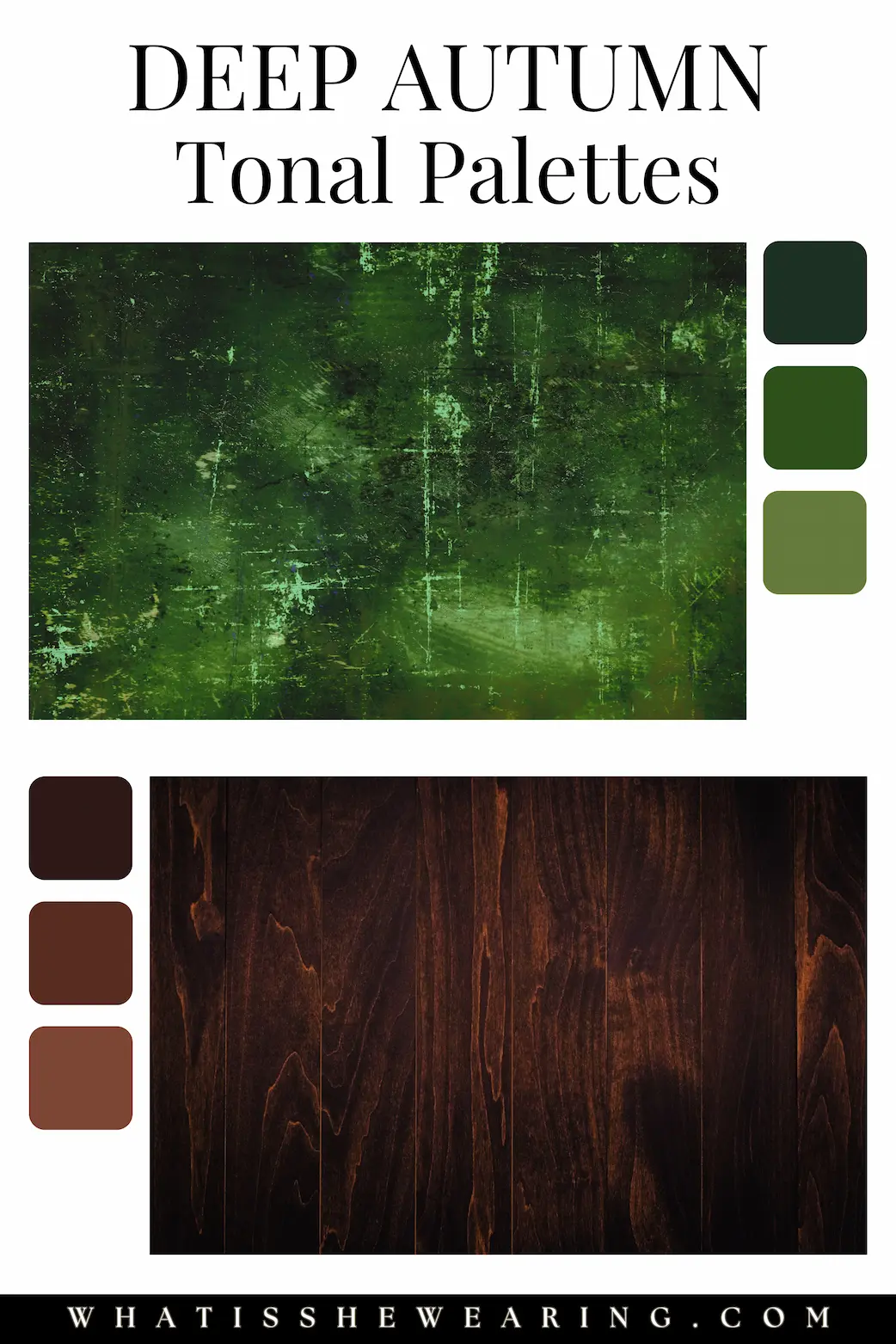
Tonal dressing in deep, moody colors is the primary styling method for a dark autumn.
Related Post: 3 Outfit Formulas That Never Fail
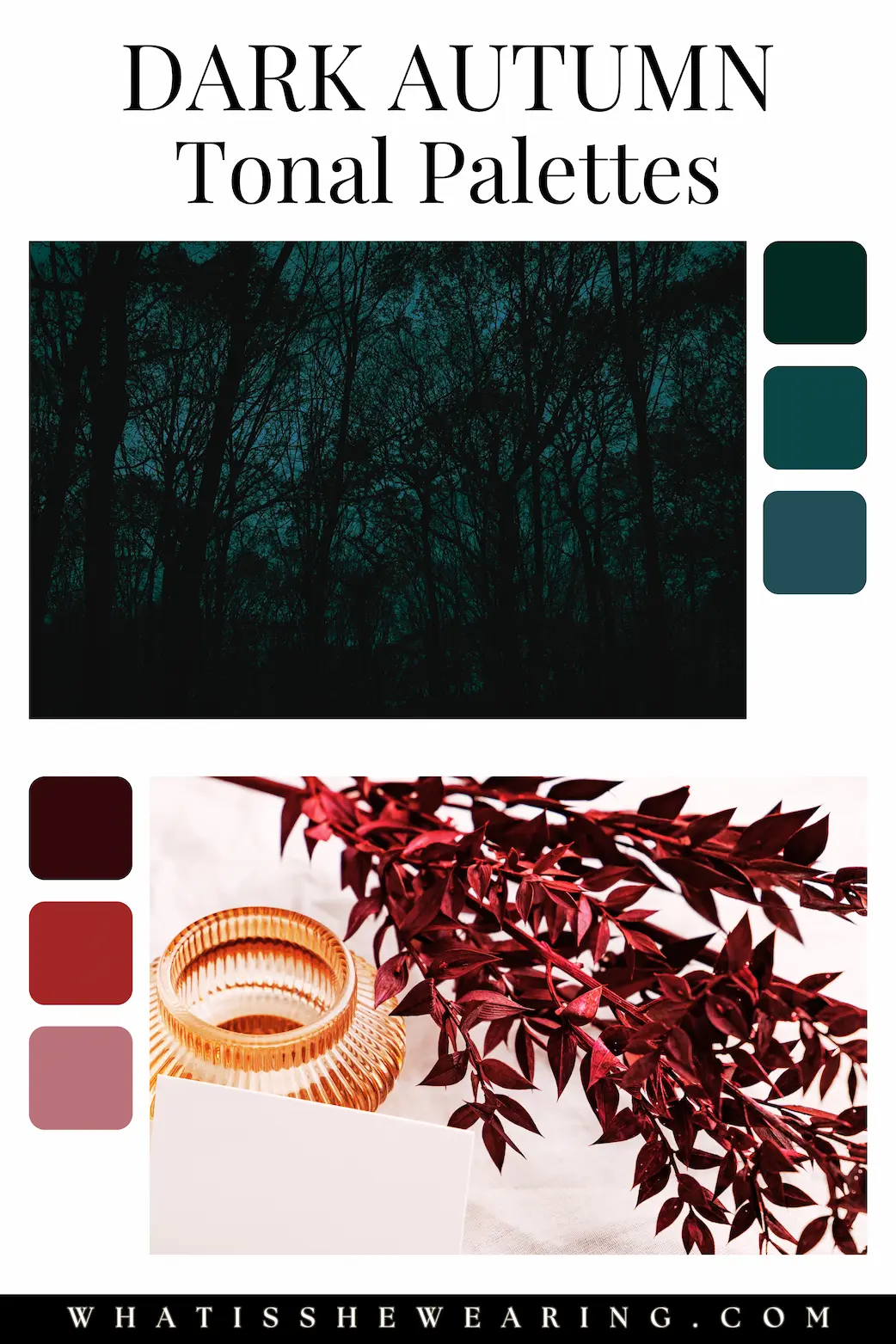
Monochrome outfits featuring the palette’s lighter colors, such as a dress in soft ivory, pair well with contrasting makeup that brings out their dramatic facial features (i.e., dark brown mascara, eyeliner, bronzer, or dark lips).
Dark Autumn Personality
These color palettes reflect a dark autumn personality through seasonal inspiration from moody florals, fallen leaves, and painted skylines.
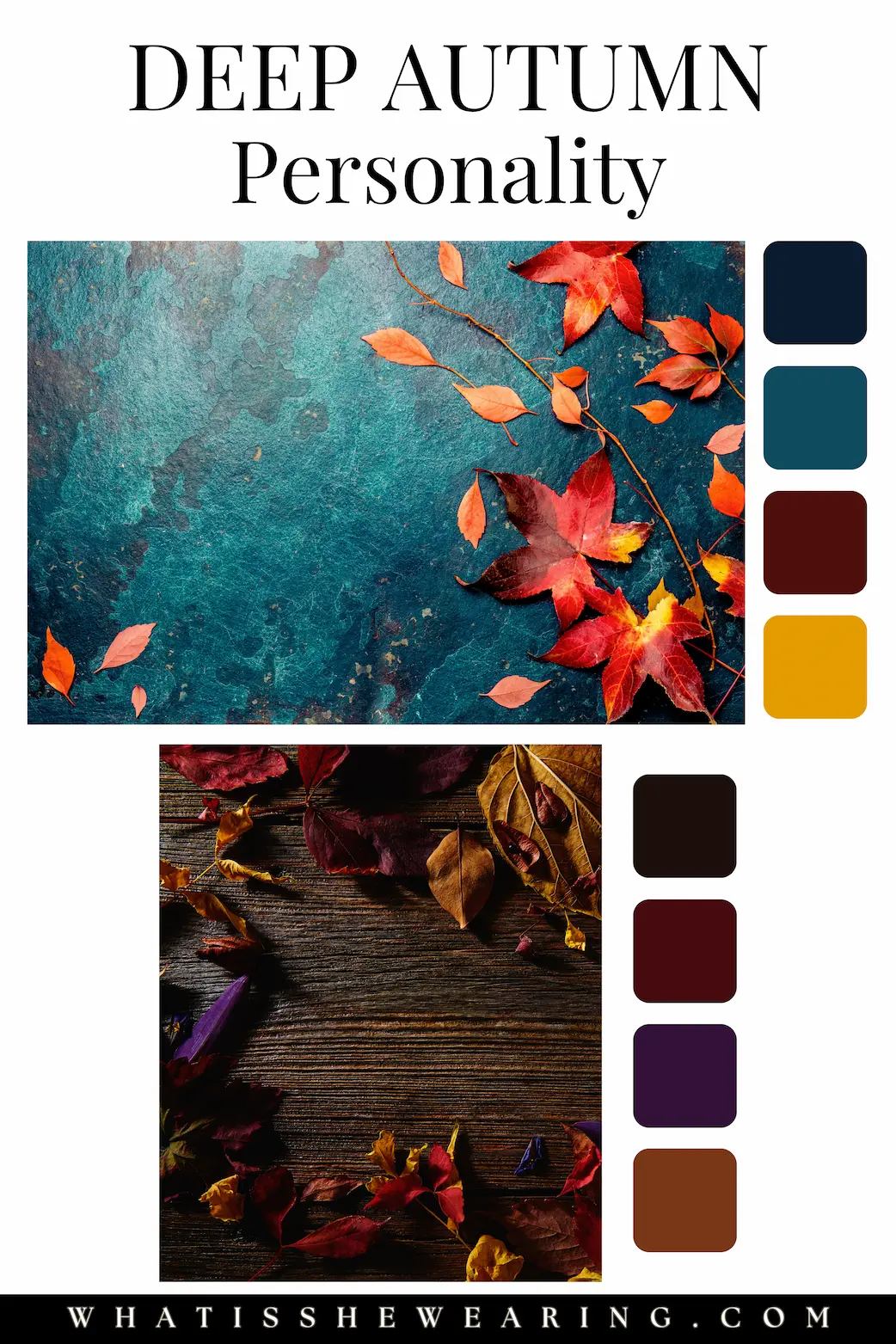
Bottom Palette: Dark Chocolate, Java, Plum Purple, Rust Brown
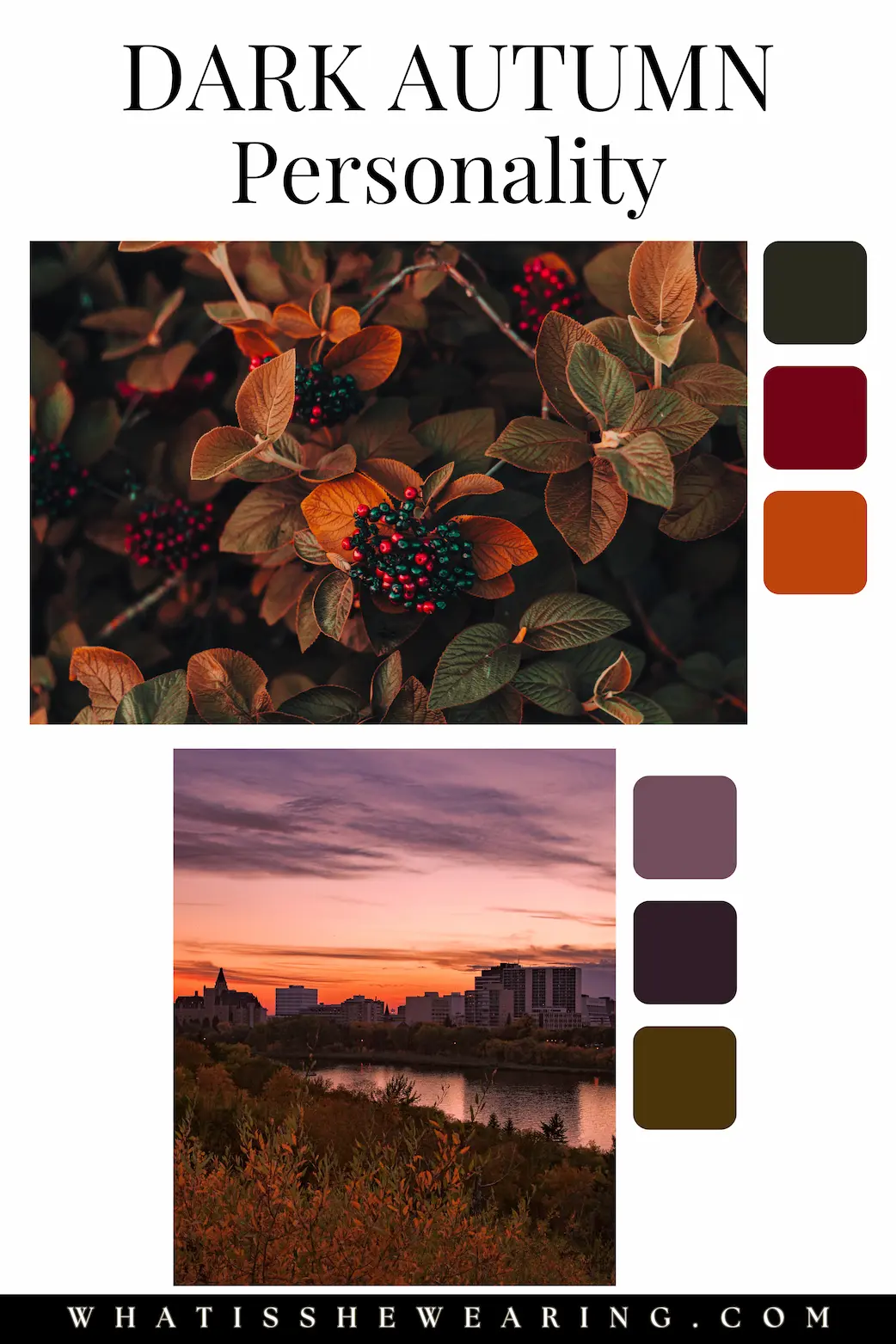
Bottom Palette: Muted Eggplant, Eggplant, Dark Olive Green
Dark Autumn Outfits
How to dress as a dark autumn? Dark autumn outfits should always include something dark, as darkness is the season’s leading feature. If styling a lighter outfit, use dark accents, dramatic makeup, or warm gold jewelry to add depth to your look.
Deep autumn outfit inspiration includes a range of color schemes, styles, and prints to create a well-rounded wardrobe – plus styling tips for the perfect finish.
Dark Autumn Dresses
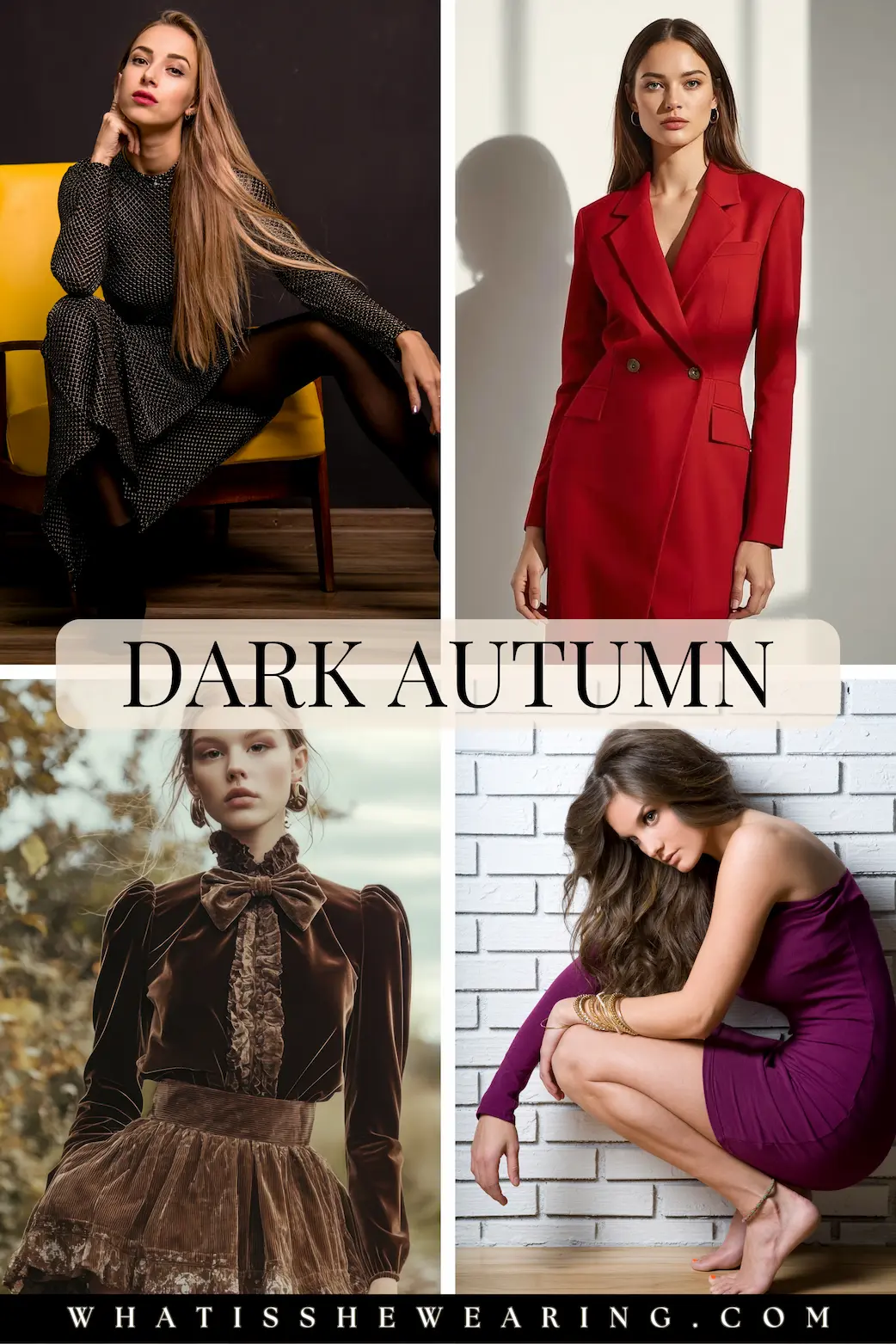
Dark autumns radiate in gold jewelry, especially with antique finishes. Each outfit should have a dark component to ground the look, even if it’s a silk scarf or a pair of boots.
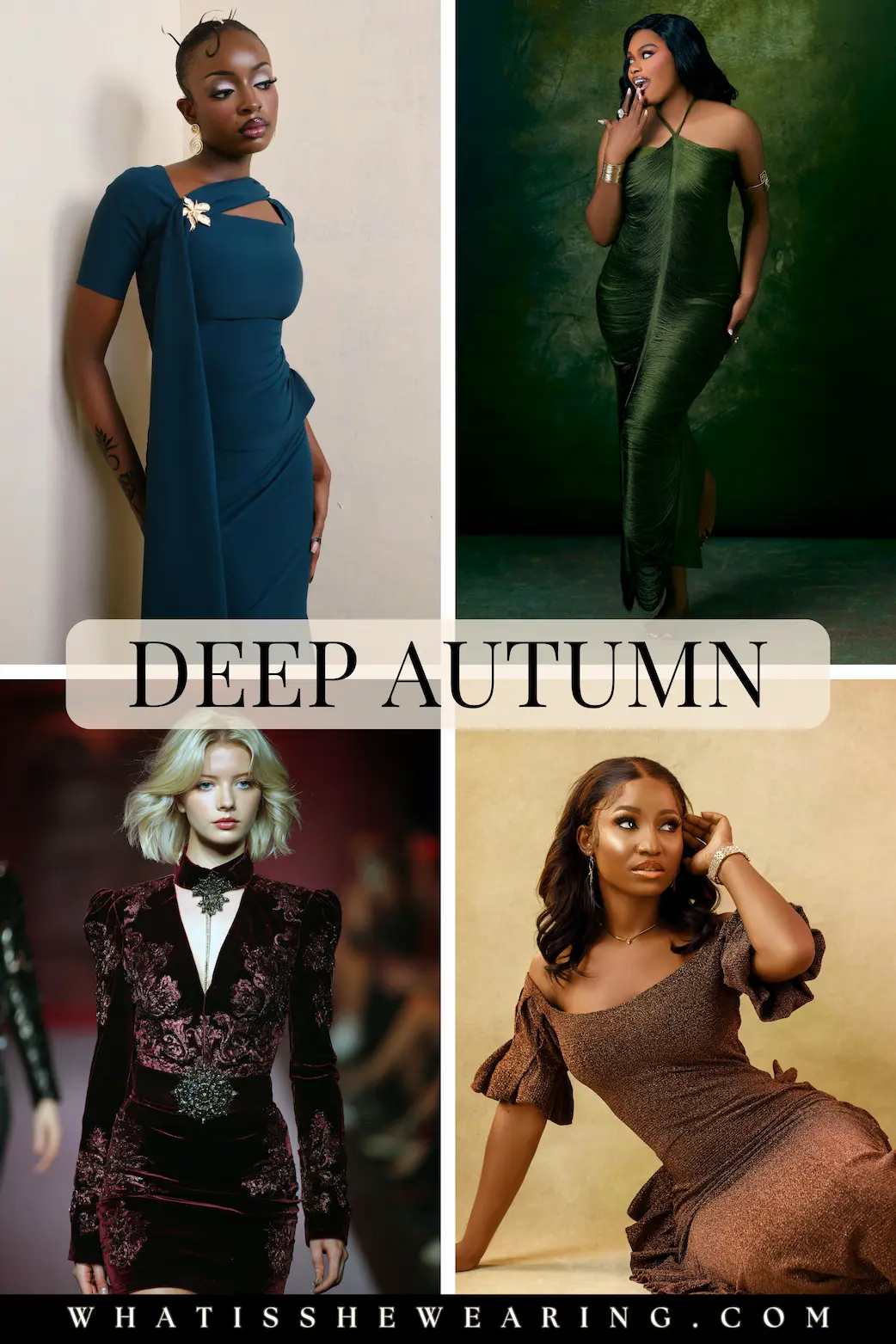
Luxe details like silk, satin, velvet, suede, brocade, and draping complement dramatic features. Antique finishes on buttons and metal hardware add depth to an outfit.
Related Post: What To Wear To A November Wedding
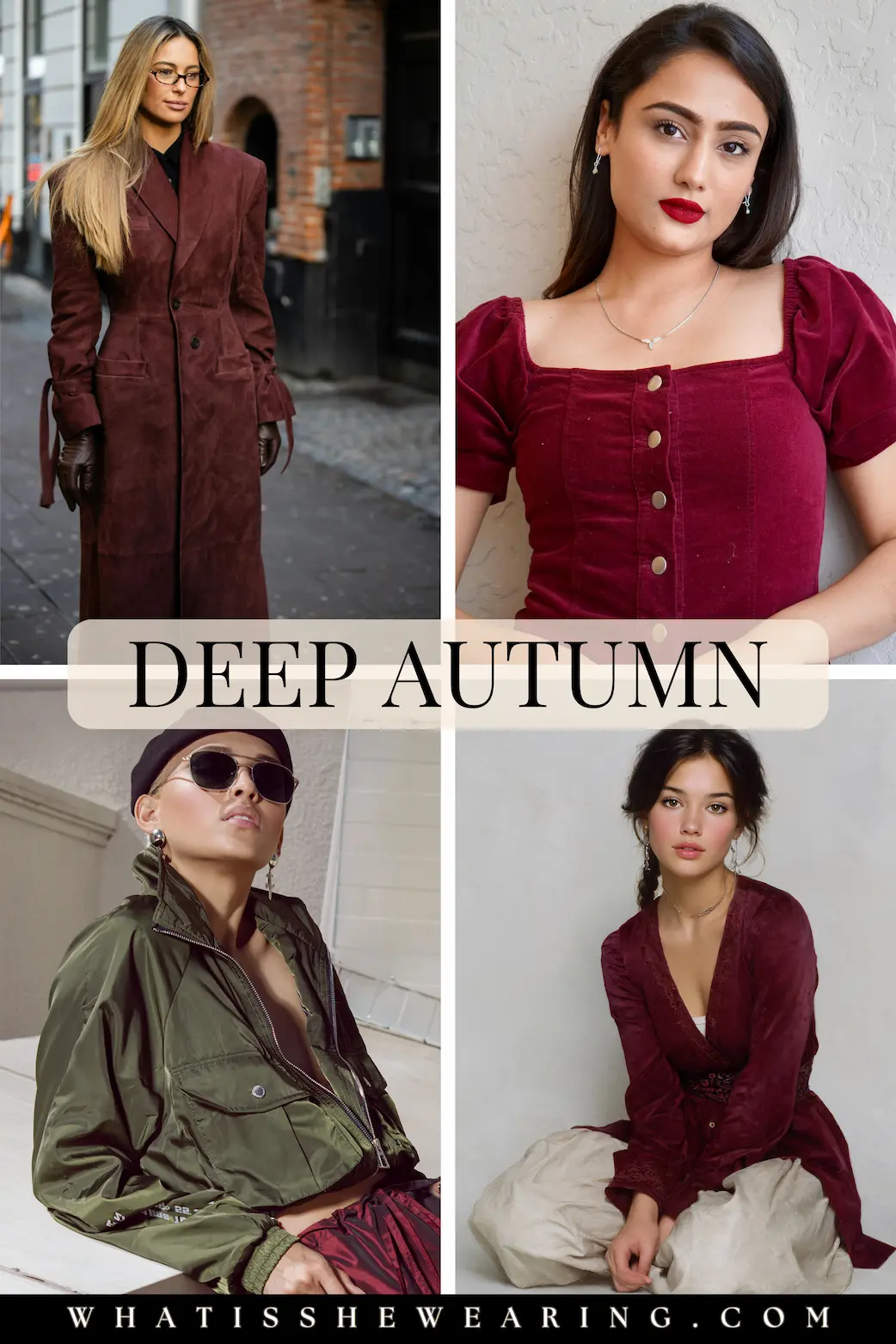
Dark Autumn Work Outfits
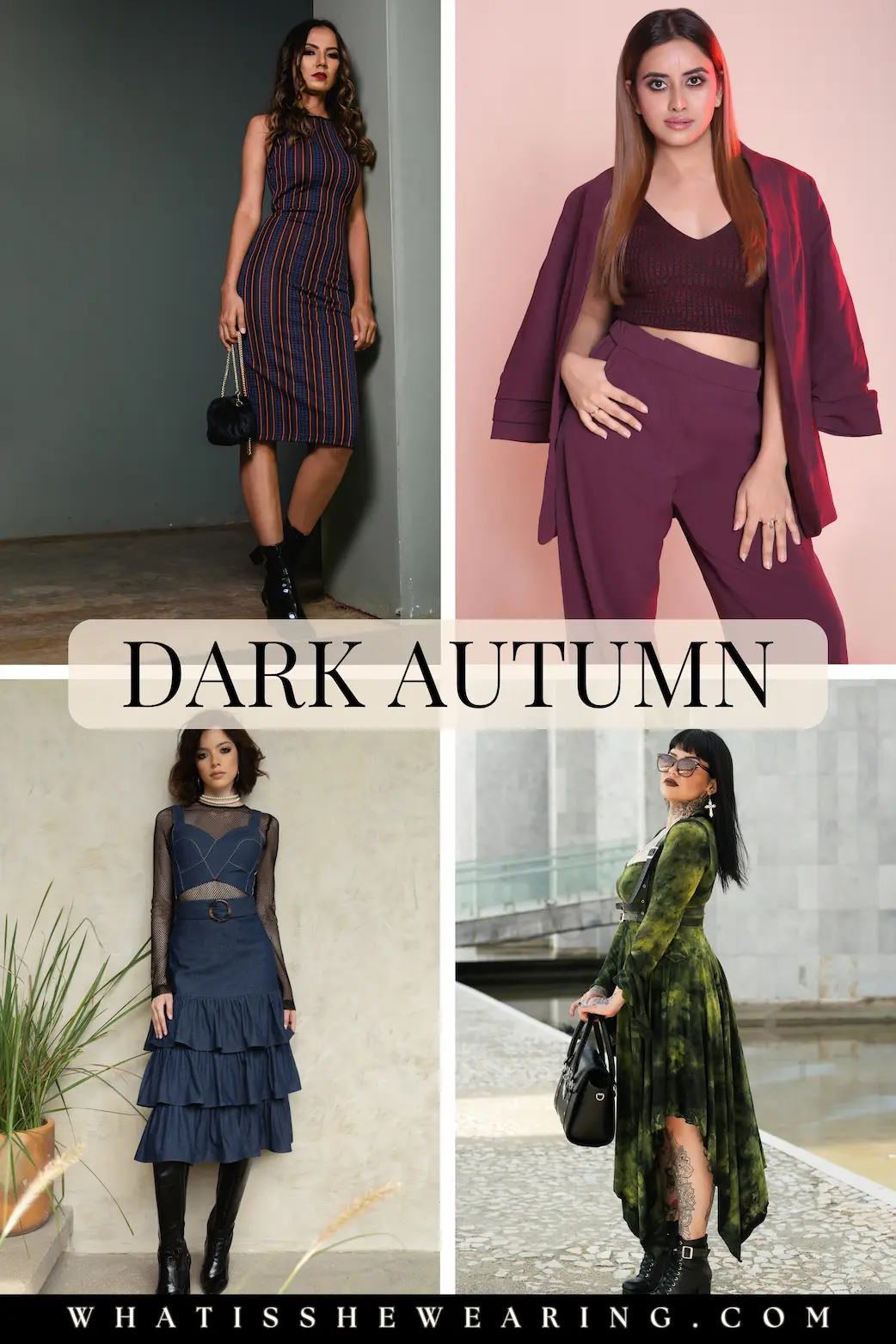
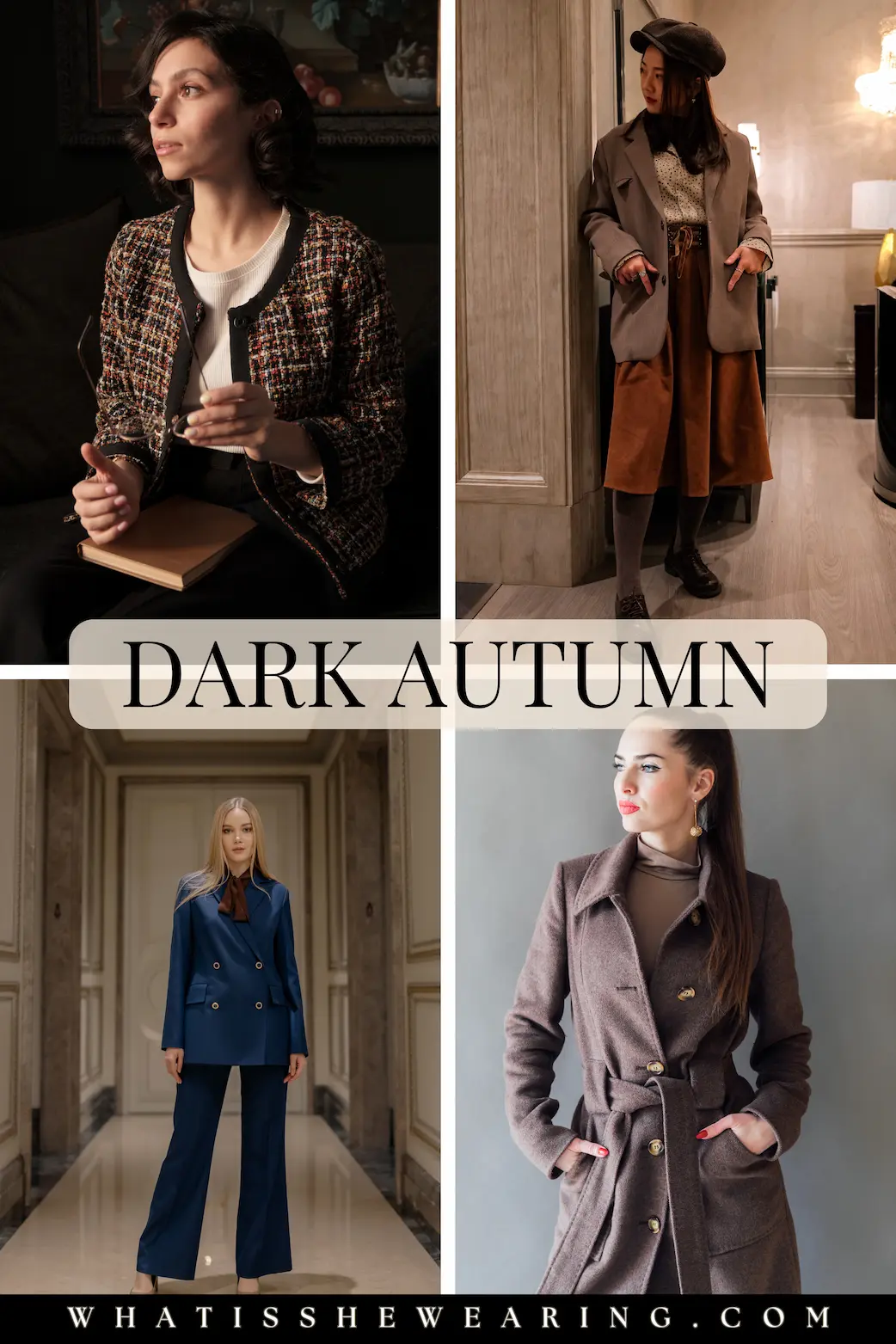
Layered moody neutrals create elegant work outfits for this color season. Add light accents or prints to create chic, multi-colored looks year-round. Or, ground a bold autumn hue with dark neutrals to make a statement.
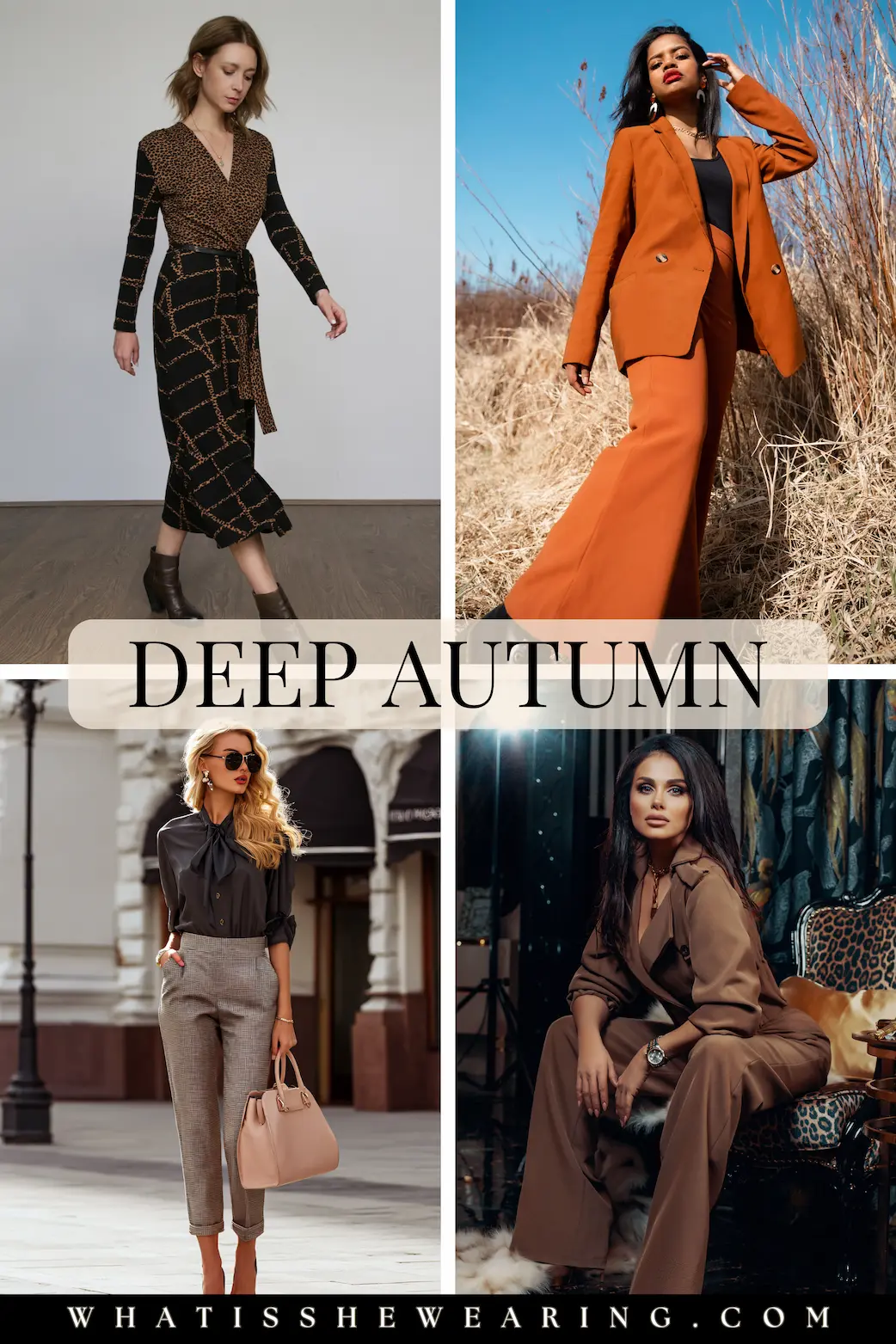
Dark Autumn Casual Looks
Luxe layers and detailing instantly elevate streetwear and casual outfits.
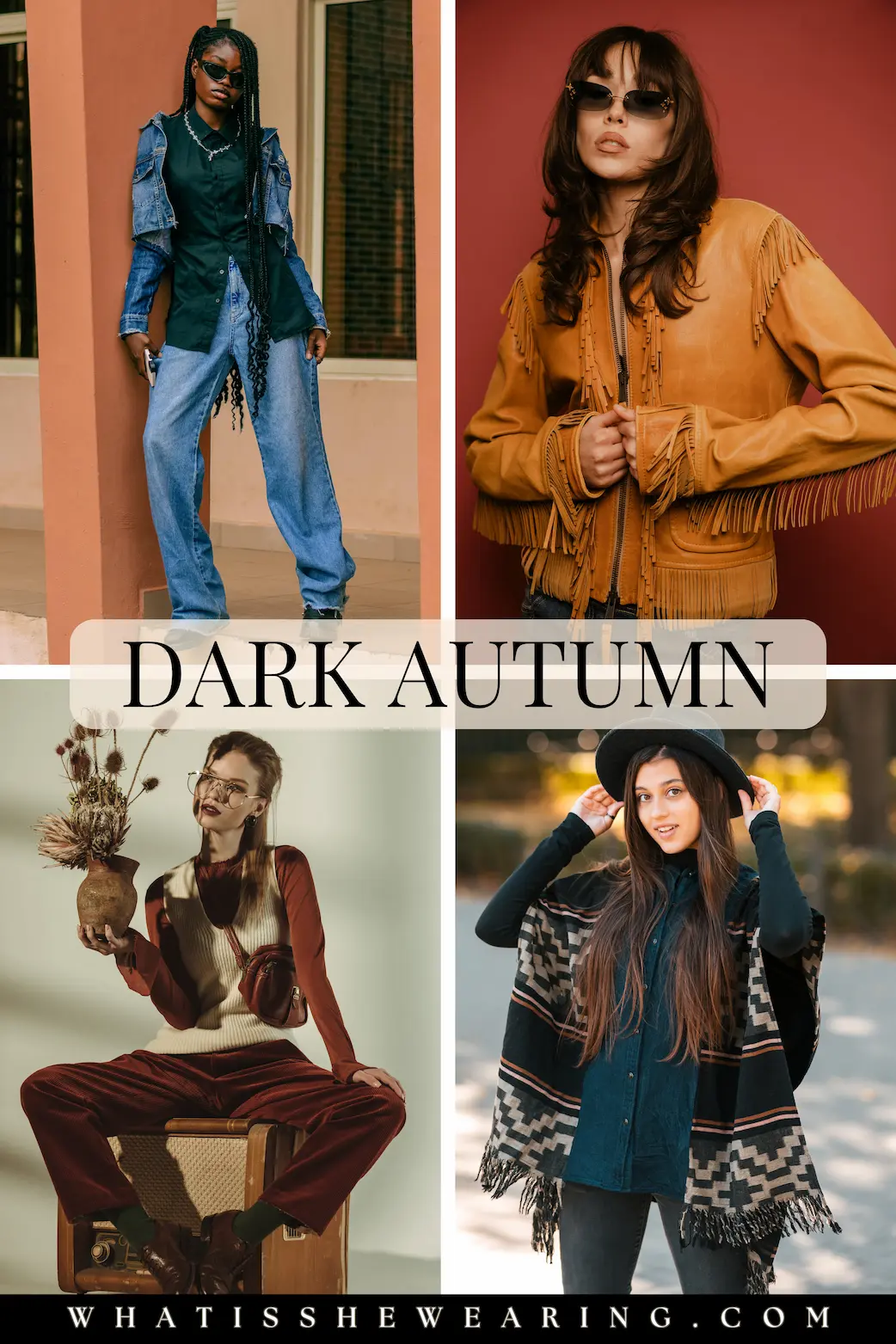
Keep everyday outfits simple with a dark top to complement naturally dark features.
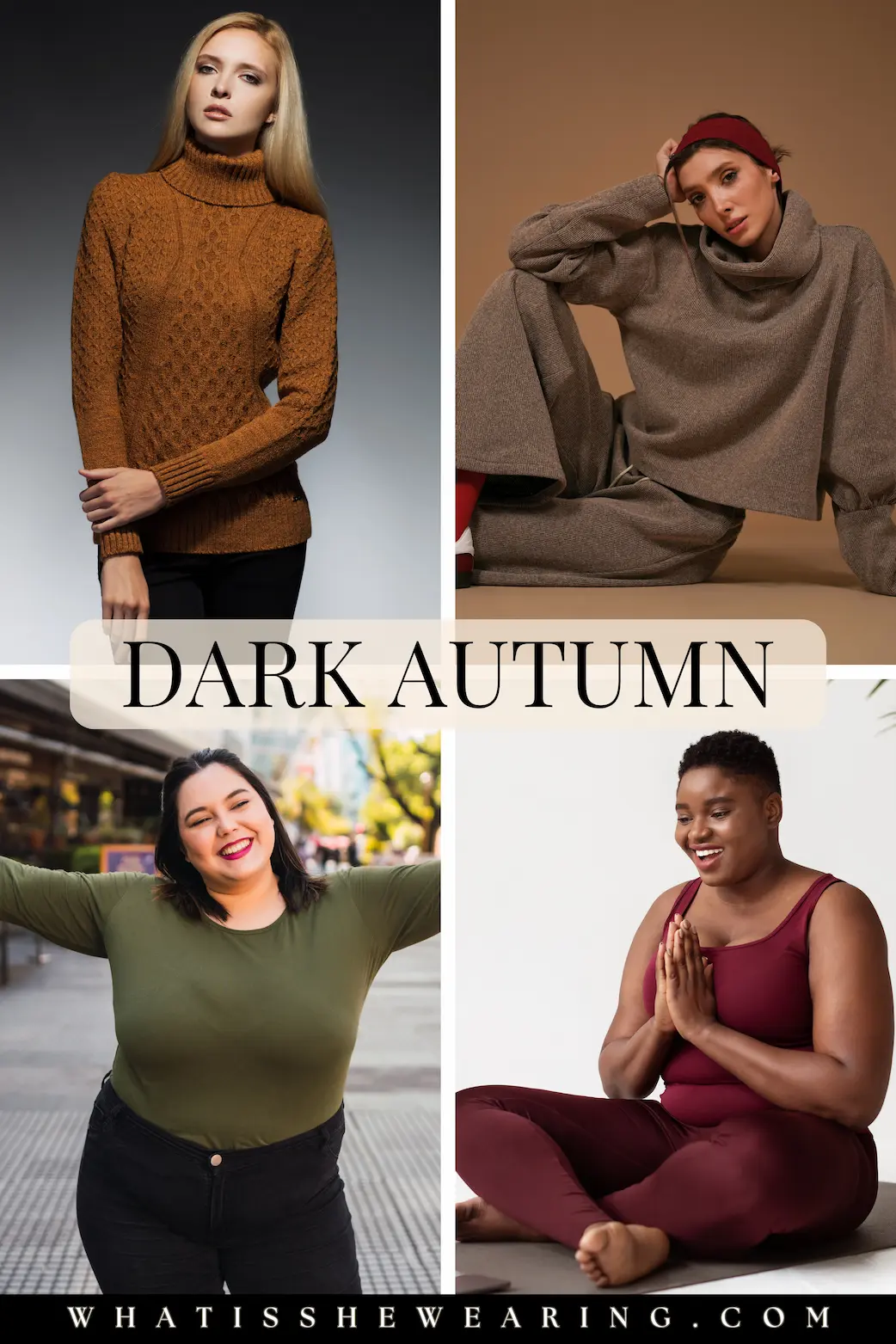
Dark Autumn Going Out Outfits
Going out outfits are a great way to experiment with different color combinations and prints.
Related Post: How To Put An Outfit Together
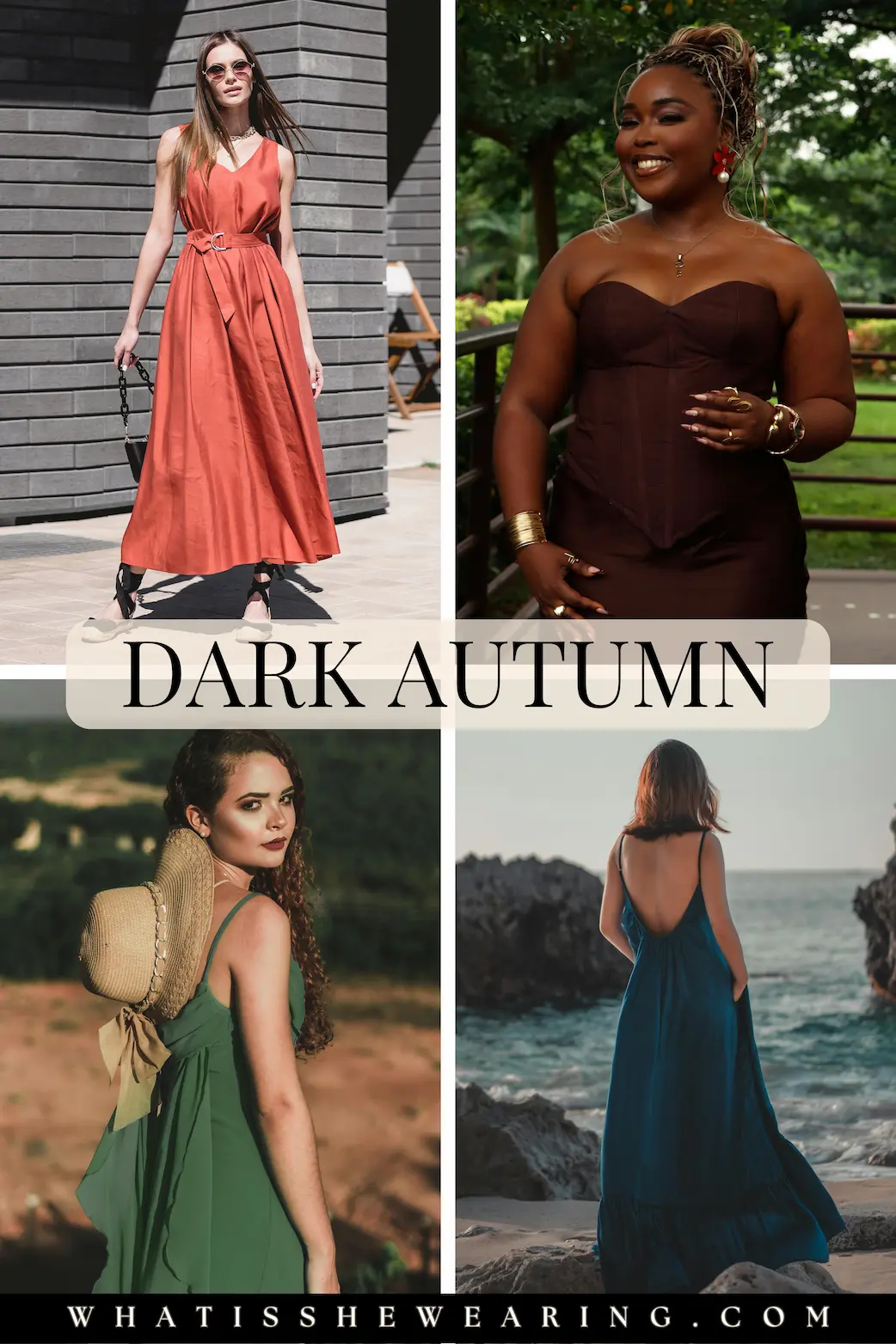
Dark Autumn Dresses For Summer
Balance deep moody tones with lightweight fabrics in linen, silk, cotton poplin, and gauze for that effortless drape.
Dark Autumn Patterns & Prints
Patterns and prints are a great way to bring contrast into your outfits through lighter and truer hues.
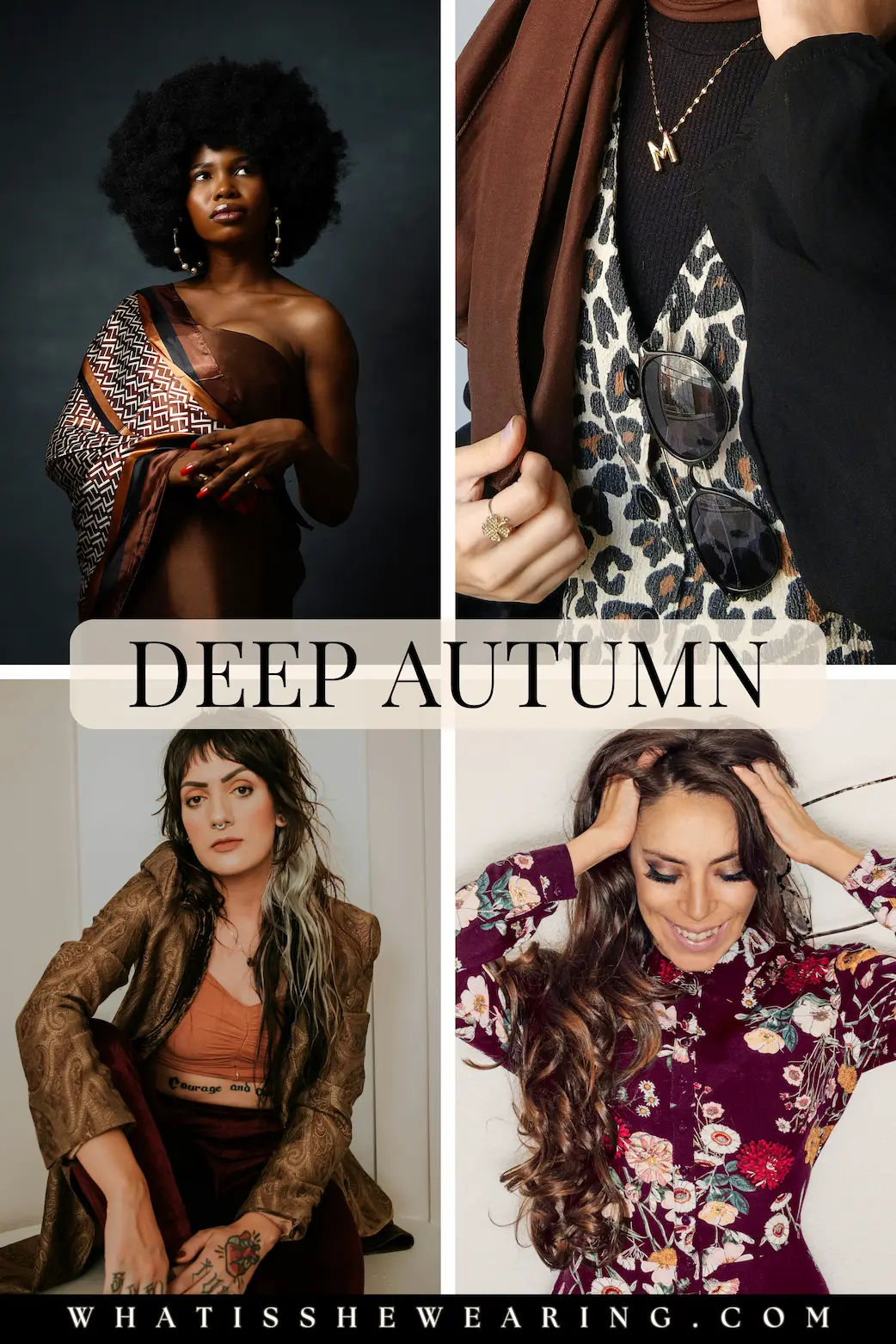
Classic prints such as polka dots, checks, stripes, florals, and paisleys are the most timeless options for purchasing in your best colors. But, don’t sleep on true animal prints, like leopard, that showcase your palette, too.
Dark Autumn Layering
Layer tonally, texturally, or stack colors to add depth to an outfit.
Dark Autumn Texture
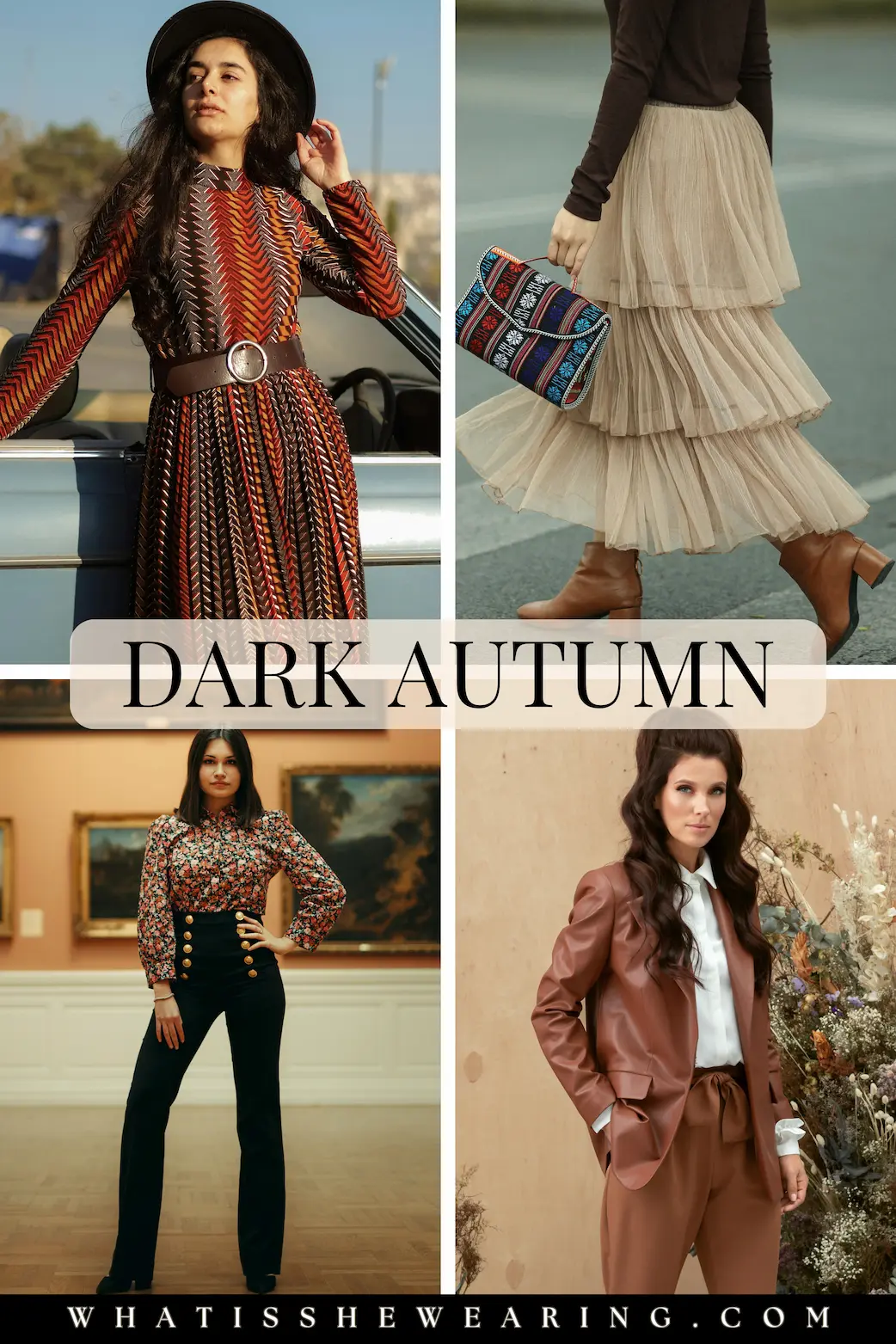
Add richness to an outfit with dark leather accents, moody geometric patterns, boho details, and warm hardware.
Now, you have everything you need to dress your best in the dark autumn color palette. It sure is a beautiful one. Happy styling, friends!
Want more dark autumn styling inspo? Check out What To Wear With Navy Blue | Best Colors + Outfit Ideas.

Tip Your Stylist?
If my style tips and fashion guides have inspired you, or you’re simply loving it here, consider leaving a donation. Any amount is greatly appreciated and supports my creative work on What Is She Wearing.